
A while ago, I published an article about common sentence structures in AI-generated content. The article focused on recurring patterns that show up in blog posts, marketing copy, social media updates, and other forms of AI writing.
I stand behind the points in that article.
The examples were real, the structures were easy to find, and in many cases they appeared with surprising frequency. After spending so much time examining them, though, another thought entered my mind. How much of what I notice today comes from the fact that I have spent months paying close attention to these patterns?
That question led me to the Baader-Meinhof Effect, also known as the frequency illusion. The concept offers an interesting lens for examining AI writing patterns and the way perception changes after we learn what to look for.
The Moment You Learn Something New
Most people have experienced the frequency illusion, even if they have never heard the term.
You learn a new word and encounter it several times during the following week. You buy a certain car and begin noticing the same model in parking lots, on highways, and at traffic lights. You discover a niche hobby and start finding references to it in articles, videos, and conversations.
The object itself has not suddenly multiplied. Your awareness has changed.
Psychologists generally explain this through a combination of selective attention and confirmation bias. Once the brain marks something as relevant, it starts noticing it more frequently. The result can feel surprisingly convincing. It may seem as though the world transformed overnight, when the real change happened inside perception.
As I read about the frequency illusion, I started wondering if the same process could explain part of my experience with AI writing.
Why Is It Called the Baader-Meinhof Effect?
The name itself has an unusual history.
Baader-Meinhof was the popular name for a German militant group active during the 1970s. The group had nothing to do with psychology, language, or cognitive science. The connection came decades later when someone described an experience that many people immediately recognized.
 After encountering the name “Baader-Meinhof” for the first time, the person began seeing it repeatedly within a short period. Others responded with similar stories about words, ideas, products, and concepts that seemed to surface everywhere after they first entered awareness. The label stuck, and people started referring to the phenomenon as the Baader-Meinhof Effect.
Psychologists usually prefer the term “frequency illusion” because it describes the process more accurately. The original name survived anyway, perhaps because it is memorable in a way that technical terminology rarely is.
Learning about something changes the way it occupies space in the mind. The object may have been present all along, though awareness gives it new significance.
That possibility seemed relevant to my own observations about AI writing patterns.
AI Writing Patterns Are Real
Before going any further, it is important to make one thing clear.
The patterns discussed in my previous article are not imaginary.
Large language models learn from enormous collections of text. Similar training methods tend to produce similar habits, which means certain sentence constructions, transitions, and rhetorical devices show up repeatedly in generated content. Researchers who compare human writing and machine-generated text regularly identify recurring linguistic features and stylistic tendencies.
You do not need a research paper to notice it, though.
Spend enough time reading AI-generated content and some habits become difficult to miss. A sentence opens with a broad statement. A contrast follows. A conclusion arrives in a predictable place.
The structure itself is not necessarily a problem. Human writers use many of the same techniques. Repetition is what makes the pattern easier to recognize.
That recognition formed the basis of my earlier article. The question that remained was different. Had I become more sensitive to these patterns because they were genuinely widespread, or because I now knew exactly what I was looking for?
Naming Changes the Way We See Things
One of the most interesting aspects of the frequency illusion is the effect that naming can have on perception.
Before something receives a name, we tend to notice fragments. After it receives a name, we begin noticing a system.
A person who has never heard of the frequency illusion may experience a coincidence and move on. Someone who knows the concept recognizes the phenomenon itself. The same principle can apply to writing.
Before learning about a specific sentence structure, a reader may sense repetition without identifying its source. After learning the structure, the repetition becomes easier to pinpoint. A phrase that once passed unnoticed may suddenly draw scrutiny. An underlying assumption that once seemed ordinary may become impossible to ignore.
Knowledge acts almost like a filter. It reorganizes priorities inside the mind and influences what rises to the surface.
This may explain part of my experience. Weeks of studying AI writing patterns had given me a clear picture of the structures I wanted to examine. Recognition became faster because I knew what signs to watch for.
The World Has Changed Too
The frequency illusion explains part of the puzzle, though it does not explain everything.
The internet contains far more AI-generated content today than it did a few years ago. Industry surveys show widespread adoption of generative AI among marketers, publishers, and businesses of all sizes. AI content creation moved rapidly from experimentation into everyday practice.
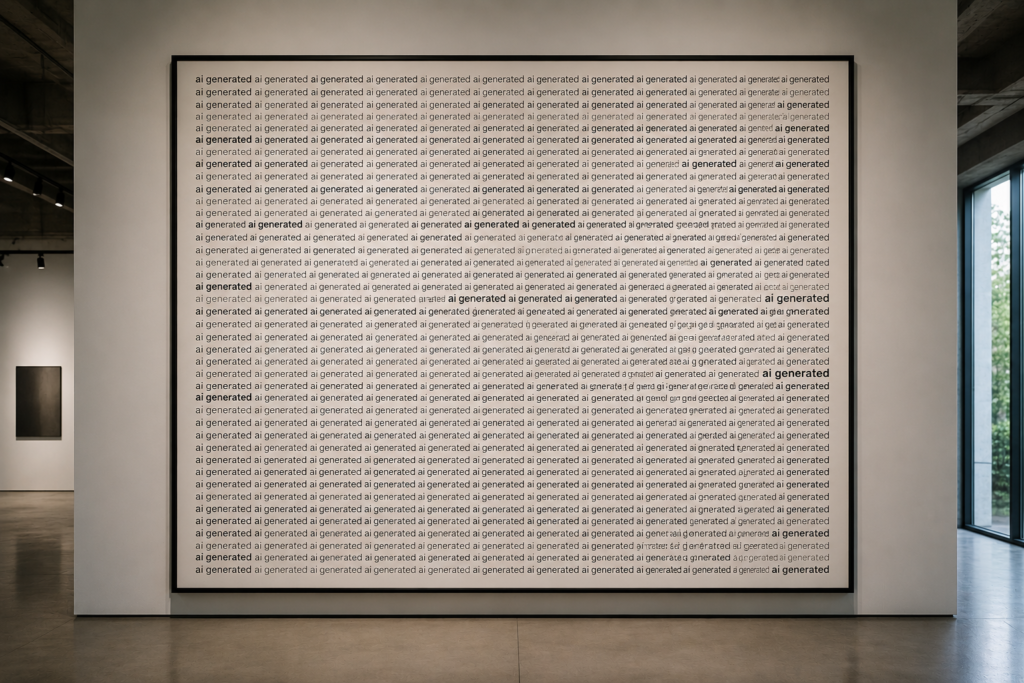 As AI-generated content becomes more common, opportunities to encounter recurring structures increase as well. Recognition grows through repeated exposure, and awareness becomes sharper through recognition.
If I notice AI writing patterns more frequently today, part of the explanation may come from the simple fact that there is more AI-generated content in circulation. Another part may come from the fact that I now possess a mental catalogue of structures that previously had no label.
Readers Learn Faster Than We Think
Most people do not spend their time analyzing sentence structures. They run businesses, manage teams, raise families, and navigate countless responsibilities. Even so, readers learn.
A person does not need formal training in linguistics to recognize repetition. Exposure teaches its own lessons. Over time, readers develop instincts about content. They may not identify a specific construction by name, though they can sense when articles, social posts, or marketing messages start sounding similar.
The reaction is subtle, though it accumulates.
Months later, a blog post that once seemed fresh may feel predictable. A social media caption may create a sense of déjà vu. The reader may struggle to explain exactly why, though the impression remains.
Much of the discussion around AI writing focuses on detection tools, prompts, and technical techniques. A simpler issue deserves attention as well. People become better at recognizing repetition. The same principle applies in literature, advertising, design, film, and music. Content generated with AI is subject to the same reality.
What This Means for AI Content Creation
The rise of AI content creation solved many practical problems. Content that once required days can now be produced in minutes, and small businesses have access to capabilities that previously belonged to larger organizations.
Volume became easier, distinctiveness became harder.
A business can publish more content than ever before, though the more important question concerns the source of that content. What information shapes it? What products inform it? What identity gives it direction?
Those questions influenced the way we designed Stryng.
The platform starts with a company’s website. Products, descriptions, and brand information provide the foundation. Stryng then creates social media content, visuals, videos, carousels, and advertisements based on that source material.
 The objective was never content production for its own sake, but content grounded in the business itself.
A founder provides a website link, Stryng analyzes the information, generates content, accepts feedback, and publishes approved posts automatically. The process emerged from a simple observation: the internet does not need more generic content. Businesses need content connected to what they actually sell.
A Question I Still Think About
I still think about the Baader-Meinhof Effect from time to time because it offers a useful reminder that perception is not passive. Knowledge changes what we notice, and awareness can reshape the way the world seems organized.
At the same time, AI writing patterns are not a product of imagination. They exist, and they have become easier to identify as AI-generated content spreads through blogs, newsletters, social platforms, and marketing campaigns.
Perhaps that is why this topic continues to interest me. It sits at the intersection of two realities. One concerns the world around us, the other concerns the lens through which we view it.
The patterns are real, and so is my awareness of them. The difficult part lies in determining where one influence ends and the other begins.