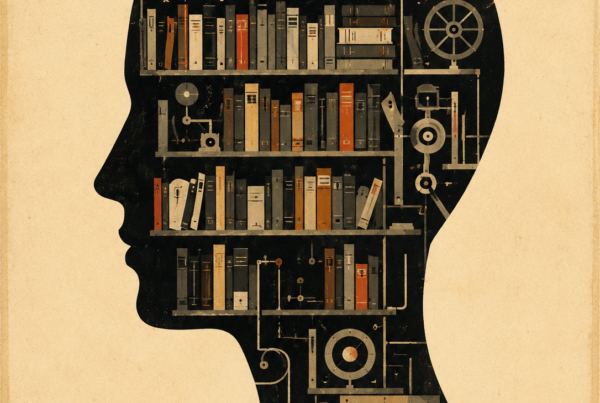
Twenty years ago, if you had a difficult question, you probably knew where to take it. You asked a teacher after class. You searched through books at a library. You visited a doctor, consulted a lawyer, or typed a few words into a search engine. Each source possessed its own kind of authority. However imperfect these sources were, they shared an assumption so ordinary that few people noticed it. Somewhere behind every answer stood a human mind.
Today, millions of people begin somewhere else. They ask an artificial intelligence.
People ask it to summarize scientific papers, draft legal arguments, explain philosophy, diagnose computer problems, recommend investments, write wedding speeches, and help them think through moral dilemmas.
In many cases, the AI does more than locate information. It produces a response that did not exist in exactly that form before the question was asked. Most users care little about the distinction. The answer arrives almost instantly, written in clear prose and delivered with confidence.
Public debate usually revolves around a predictable set of issues. Can AI think? Will it replace human workers? Could it become conscious? Those issues deserve serious discussion. Another question, however, may carry greater significance.
What if artificial intelligence alters more than the way we obtain knowledge? Or, to be more precise, what if it changes the conditions under which society accepts something as knowledge in the first place?
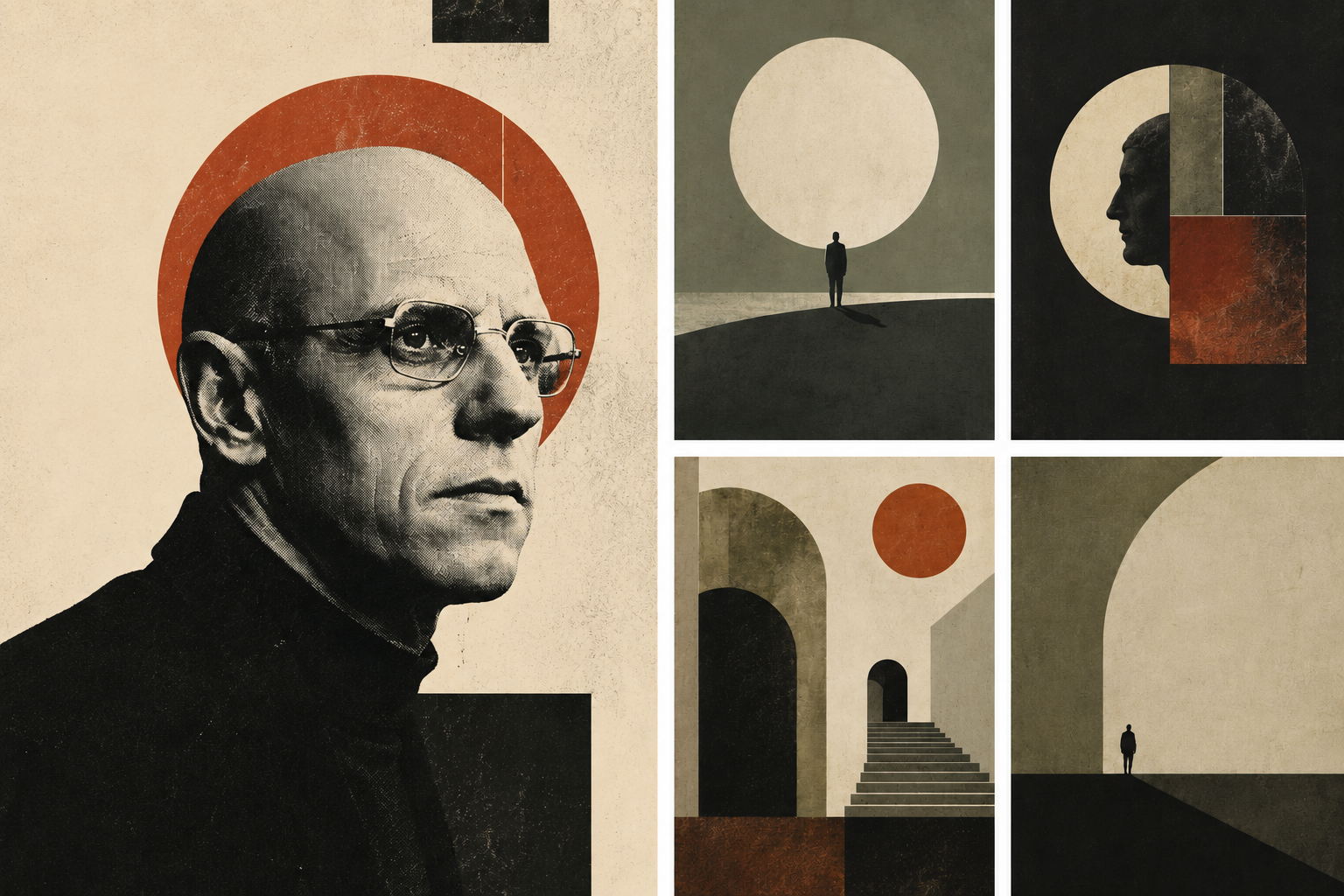
That possibility invites a different kind of inquiry. To pursue it, it helps to spend time with a philosopher who never encountered artificial intelligence, nor predicted its arrival. Few thinkers examined the history of knowledge with the same depth as Michel Foucault.
His book The Order of Things does not attempt to foresee the future. It investigates the past and provides a lens through which we can examine the present.
A Philosopher of Historical Blind Spots
What Is an Episteme?
Foucault begins with an observation that sounds almost obvious. Every historical period rests upon assumptions about knowledge that most people rarely notice. They seem as natural as the changing seasons because everyone grows up inside them.
He called this underlying structure an episteme. The term may sound technical, though the idea itself is simple.
Episteme shapes the questions that seem worth asking, the kinds of evidence considered persuasive, the experts whom society trusts, and the explanations regarded as reasonable.
- Several centuries ago, many European physicians explained disease through the balance of bodily humors. Bloodletting therefore seemed scientifically respectable because it belonged within the accepted medical framework of the time. Contemporary medicine rejects that explanation. Human bodies did not undergo a fundamental transformation: the framework through which disease became intelligible changed.
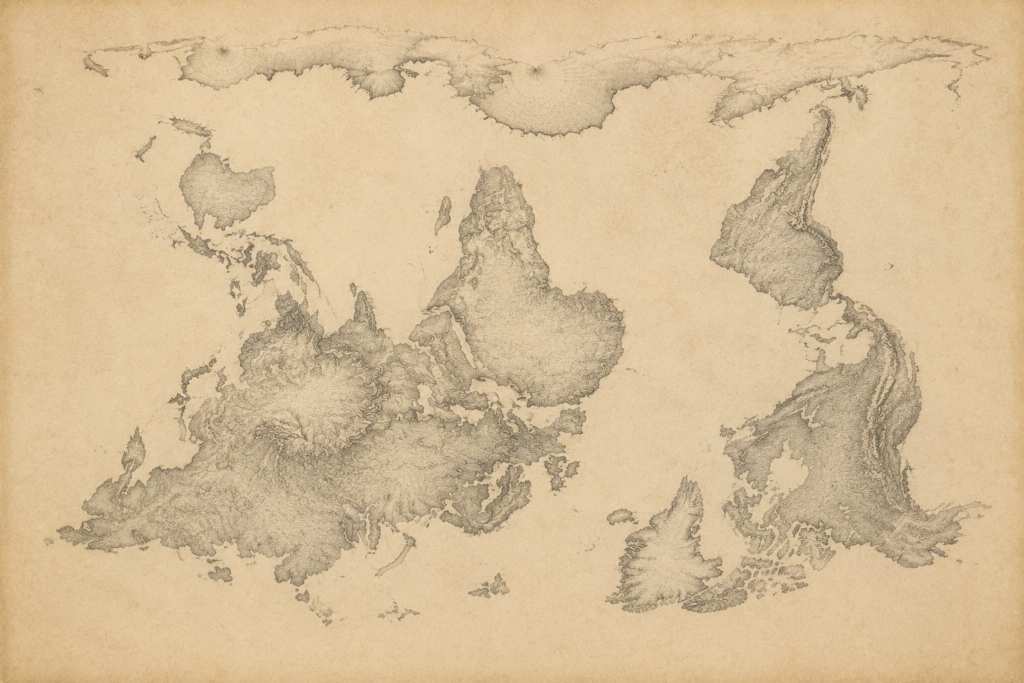
- Most maps place north at the top. Nothing in nature requires that arrangement. Cartographers could place south, east, or west at the top instead. North occupies that position because convention made it seem natural.
An episteme functions in much the same way. It organizes knowledge through conventions that become so familiar they appear self-evident. As a result, certain ideas become visible while others remain beyond the horizon of thought.
 The Invention of ‘Man’
One of the boldest arguments in The Order of Things concerns something even closer to home: the modern idea of the human being.
When Foucault writes that “man is an invention,” he does not deny the existence of human beings. His claim concerns the way modern thought understands humanity. The image of the human being as the central subject who knows the world, studies the world, and ultimately grounds all knowledge emerged only at the end of the eighteenth century with the rise of modern thought. It is not an eternal truth.
We assume that knowledge begins with human observation, human reasoning, human interpretation, and human judgment. Like the orientation of a map, this arrangement appears natural largely because we have inherited it.
His point is neither to reject that picture nor to defend its opposite. He asks a historical question. How did this image of humanity become so persuasive? Could another historical period organize knowledge differently?
That possibility changes the conversation about artificial intelligence before we even begin discussing the technology itself.
The Wrong Question About AI
Most discussions of artificial intelligence compare machines with individual human beings.
Can AI reason? Can it create? Can it understand meaning? Will it surpass human intelligence?
Each question treats AI as another competitor entering a contest that humanity has long dominated.
Foucault usually redirected philosophical inquiry elsewhere. He paid less attention to individual minds and more to the systems that determine how knowledge acquires legitimacy.
Instead of asking who possesses knowledge, he examined the conditions that allow certain statements to count as knowledge in the first place.
Who grants them authority? Which institutions recognize them? Which practices make them persuasive? Which assumptions permit them to circulate as truth?
These questions lead well beyond debates about consciousness or human replacement. They direct our focus toward the structure of knowledge itself.
The Machine in the Middle
Imagine that you consult an AI about tax law. The response does not come from a single legal textbook or one particular lawyer. The system draws upon an enormous body of legal writing and produces a new answer for your specific question. You may verify its claims, reject its advice, or consult an attorney before acting. Even so, the AI has become the first place where legal knowledge takes shape in a form you can immediately use.
Now consider medicine. A physician examines an X-ray with the aid of an AI system that detects subtle patterns almost impossible for the human eye to notice. The physician retains responsibility for the diagnosis. Even so, medical judgment now develops in conversation with a system that identifies possibilities no individual doctor could reliably detect alone.
Scientific research presents another example. Artificial intelligence has begun to suggest promising molecular structures, identify unexpected relationships within immense collections of data, and propose hypotheses that researchers later test through experiments. Scientists continue to design studies, interpret results, and decide which conclusions deserve acceptance. The route through which discovery emerges, however, has become more complex.
Human beings remain indispensable in every one of these cases. The path that knowledge follows has begun to change.
More Than a Tool
This distinction helps separate AI as a tool from AI as part of the infrastructure through which knowledge circulates.
A microscope extends vision. A calculator performs arithmetic. A search engine retrieves documents created by others. Such tools assist human activity without fundamentally changing how knowledge is produced.
Infrastructure is different. Roads shape cities, electrical grids shape daily life, and the internet reshaped communication by becoming the environment through which it occurs. Artificial intelligence may be moving in the same direction.
Increasingly, knowledge reaches us after passing through AI systems. Search engines generate answers instead of lists of links. Email clients draft replies. Hospitals use AI during diagnosis, researchers rely on it to generate hypotheses, and students often consult it before opening a textbook. These are not isolated conveniences. They suggest that AI is becoming part of the ordinary infrastructure through which knowledge is organized and delivered.
Here another of Foucault’s ideas becomes useful: discourse. If an episteme describes the broad assumptions of an age, a discourse is the language a particular field speaks. It includes its vocabulary, its key concepts, the distinctions it draws, the kinds of evidence it accepts, and the forms of argument it considers persuasive. Medicine, law, and economics each have their own discourse, which shapes both how professionals understand the world and how they talk about it.
Artificial intelligence does not simply participate in existing discourses. As AI-generated writing becomes more common, it influences the vocabulary, style, and structure through which professionals communicate. If enough of that language becomes routine, the discourse itself may gradually change.
A New Regime of Truth?
The phrase regime of truth can sound more dramatic than Foucault intended. He did not suggest that secret groups decide what everyone must believe. He described the social arrangements through which some claims gain credibility while others do not.
Every society develops procedures for deciding who qualifies as an expert, what counts as acceptable evidence, and which institutions possess the authority to distinguish knowledge from error.
Truth, in this sense, does not emerge through isolated acts of individual genius. Universities, laboratories, professional associations, journals, courts, government agencies, and educational systems all contribute to the process. Together they determine how knowledge earns legitimacy.
Artificial intelligence enters these networks instead of standing outside them.
Suppose governments rely upon AI-assisted policy analysis, courts encounter legal briefs drafted with substantial AI assistance, and scientific journals receive articles that grew out of hypotheses first proposed by AI systems. In each case, AI becomes part of the ordinary production of legitimate knowledge.
The issue no longer asks if AI possesses knowledge in the same sense as a human being, but what happens when institutions begin to treat AI-mediated knowledge as an ordinary condition of knowing?
The Strange Fate of ‘Man’
Near the end of The Order of Things, Foucault writes that the modern figure of “man” might disappear “like a face drawn in sand at the edge of the sea.” Few sentences in twentieth-century philosophy have attracted more attention, and few have generated more misunderstanding.
Foucault did not predict the disappearance of human beings. He questioned the permanence of a particular idea of the human being.
His concern lay with the modern image of humanity as the unquestioned center of knowledge. Modern thought assumes that human beings observe the world, interpret it, explain it, and ultimately serve as the source through which knowledge enters society. Foucault asked a historical question. Had this image always existed? His answer was no. It emerged during a particular period, and anything with a history may also have an end.
Artificial intelligence encourages us to revisit that possibility.
The point is not that machines become human. Nor is it that human beings lose their importance. The question concerns the place that humanity occupies within the production of knowledge.
Consider our previous examples: law, medicine, and science.
- An attorney receives a carefully argued brief drafted by AI, reviews it, corrects its weaknesses, and submits the final version to the court. Who produced the argument?
- A physician studies an AI-assisted diagnosis, compares it with clinical evidence, and reaches a final judgment. Where did the medical knowledge originate?
- A scientist investigates a hypothesis proposed by AI, conducts experiments, and publishes the results after careful verification. Who deserves credit for the discovery?
The same questions extend into ordinary life. Students ask AI to explain difficult philosophical texts. Managers rely upon AI when they prepare reports. Writers seek help with structure, style, or research. Programmers consult AI before they write code.
None of these examples removes human judgment from the process. Every one of them, however, complicates the simple picture in which knowledge begins inside an individual mind and then enters the world.
Perhaps the modern image of the human subject has never been quite as self-sufficient as it seemed. Knowledge has always depended upon institutions, languages, traditions, technologies, archives, and communities. Artificial intelligence draws those relationships into sharper focus.
The image of the solitary thinker may no longer describe how knowledge comes into existence.
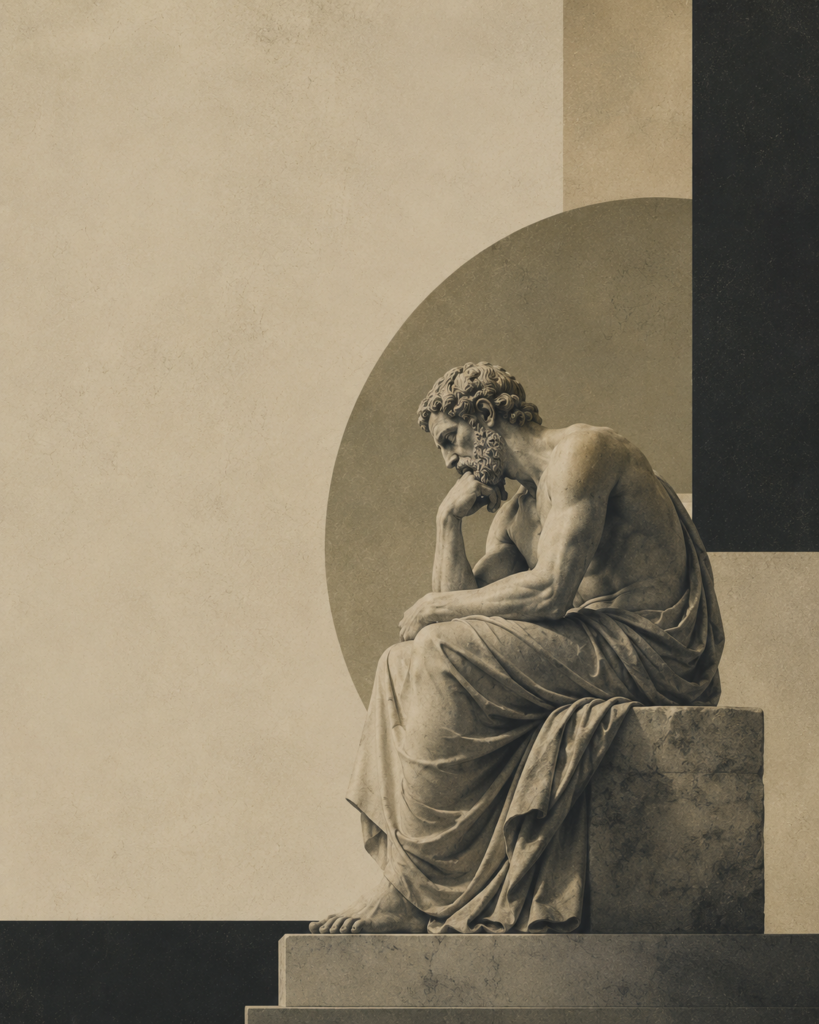 That possibility does not require dramatic conclusions. Human beings continue to ask questions, evaluate evidence, exercise judgment, and bear responsibility for their decisions. AI cannot assume those responsibilities in any straightforward sense.
The philosophical issue concerns the architecture of knowledge.
For several centuries, modern societies have treated the human subject as the privileged source of understanding.
Does that assumption remain secure?
A New Order of Knowledge?
Reasons for Skepticism
This question calls for caution.
Nothing requires us to conclude that artificial intelligence has inaugurated a new historical era. The temptation to declare every major technology revolutionary has misled many observers before.
Printing transformed the circulation of books without eliminating authors. Photography changed visual representation without ending painting. The internet reshaped communication, though many older institutions survived with surprising resilience.
Artificial intelligence may follow the same path. It could become an extraordinarily powerful technology while leaving the deeper structure of knowledge largely intact.
There are good reasons to consider that possibility.
Large language models learn through immense collections of human writing. Their responses depend upon books, articles, conversations, scientific papers, legal decisions, and countless other products of human culture. Every answer reflects a vast inheritance created by people.
Under those conditions, AI may extend existing systems of knowledge instead of replacing them.
Power Without a New Episteme
Artificial intelligence may strengthen current relations of power instead of transforming them. The largest AI systems emerge within powerful corporations. Governments regulate their use. Universities train many of the researchers who design them. Wealthy institutions possess the resources required to develop and deploy them.
A Foucauldian perspective encourages us to examine these relationships with great care.
Power rarely disappears. It changes form.
Artificial intelligence could reinforce existing authorities by concentrating influence inside institutions that already possess considerable social and economic power. If that happens, AI would redistribute authority within the present order instead of creating a fundamentally different one.
The other possibility also deserves attention.
Human beings have long occupied a privileged position within modern theories of knowledge. We assume that knowledge originates in human observation and human reasoning before it reaches books, laboratories, classrooms, or public institutions.
Artificial intelligence complicates that assumption. It does not simply store or transmit knowledge. It generates hypotheses, proposes explanations, identifies patterns, and produces arguments that humans evaluate, revise, and sometimes accept. Knowledge still depends on human judgment, but it increasingly emerges through collaboration between people and computational systems.
An Open Question
No one can say with confidence that we stand at the beginning of a new episteme. Historical transformations become visible only after considerable time has passed. Those who live through them rarely possess enough distance to recognize their full significance.
Perhaps our own period will look different to future historians than it does to us.
Perhaps it will not.
Foucault resisted sweeping predictions. His work invites careful observation instead. He encourages readers to examine the assumptions that seem most obvious, especially those that pass unnoticed because they have become part of ordinary life.
Artificial intelligence may represent one of those moments.
The deepest philosophical question raised by AI has little to do with machine consciousness or simulated emotion. It concerns the organization of knowledge itself.
Modern societies have long assumed that knowledge begins with human subjects who observe, reason, interpret, and explain the world. Artificial intelligence may extend human capacities in powerful new ways. It may strengthen institutions that already possess authority. It may prove less historically significant than today’s excitement suggests.
But, human beings may no longer occupy the unique position from which knowledge emerges. They may participate in a wider network that also includes institutions, archives, computational systems, scientific practices, and forms of organization that previous generations could scarcely imagine.
Does this development mark the beginning of a new episteme?
Perhaps the most valuable lesson we inherit from Michel Foucault lies elsewhere. He reminds us that every historical period accepts certain assumptions so completely that they become almost invisible. Philosophy begins when someone notices those assumptions and asks if they could have been otherwise.
Artificial intelligence invites precisely that kind of question.
The issue has never rested upon the simple claim that machines might learn to think like human beings.
The more intriguing possibility asks something else entirely.
Have we entered a historical moment in which knowledge no longer assumes a single human source, even though human beings remain indispensable to its creation?
The answer remains uncertain. Perhaps uncertainty is exactly where the most important philosophical questions belong.