Nobody questions whether mountains are real. The same goes for oceans and gravity. They existed long before humans came along, and they will probably remain long after we’re gone.
Money, for example, is different.
A hundred-dollar bill is paper covered with ink. You can’t eat it. You can’t build a house with it. If someone had never seen money before, they would have no reason to think that one piece of paper was worth more than another.
Its value comes from something we cannot hold in our hands: a shared belief. Millions of people accept that this piece of paper can be exchanged for food, fuel, clothes, or a place to live. The moment that agreement disappears, the value disappears with it.
That sounds strange because we are so used to money that it seems as natural as rain or sunlight. It isn’t. It belongs to a different kind of reality.
The same is true for far more things than we usually notice, such as a passport, a wedding certificate, or a university degree. Their existence comes from the meaning people give them.
That does not make them less real. Losing your passport before an international flight is a very real problem. So is losing your savings. Breaking a contract can also have serious consequences.
These things belong to a different category than mountains or rivers. Once you notice that distinction, you start seeing it everywhere.
The Rules Nobody Remembers Creating
Imagine visiting another country for the first time.
People greet each other differently. They eat dinner at a different hour. They stand closer during conversations or leave more personal space. Some customs seem perfectly normal to the local population and completely strange to visitors.
Many of those rules have no connection to nature. They exist because communities accepted them over many years. New generations learned them from parents, teachers, neighbours, friends, and colleagues until they became ordinary.
The same idea explains much of everyday life.
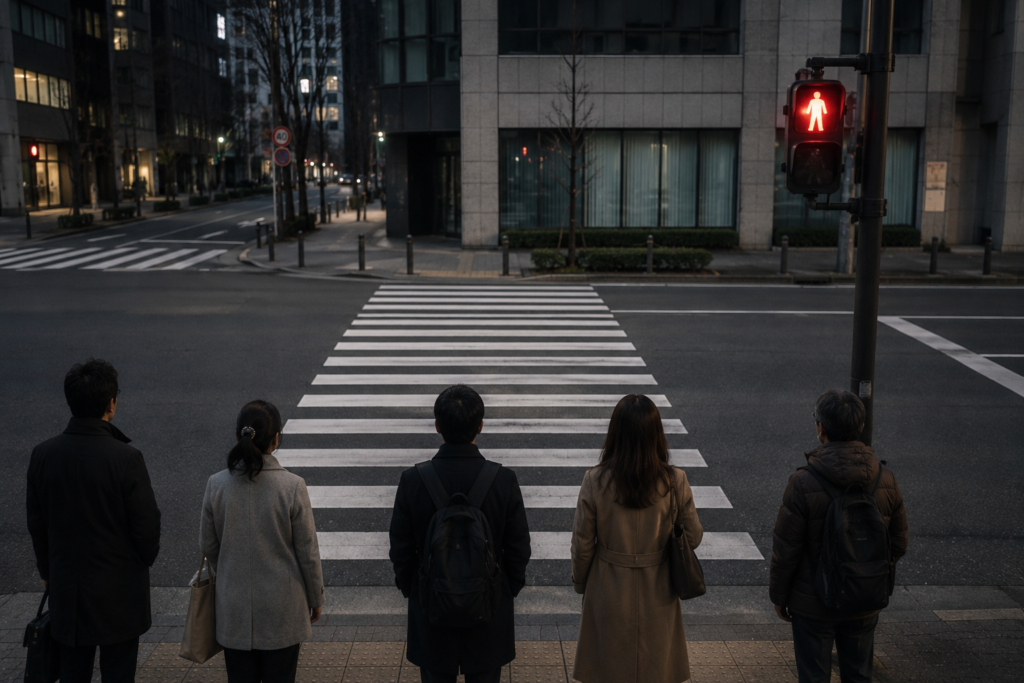
There is no law of physics that says people should stand in line while waiting to pay for groceries. Society decided that taking turns is fairer than pushing to the front. Today, most of us follow that rule without giving it a second thought.
Language works in much the same way. There is no natural reason why one object is called a chair and another a table. Words have meaning because enough people use them in the same way. A child does not invent language from scratch. The child enters a world where millions of people have already agreed on the meanings.
This happens so naturally that we don’t think about it.
We usually imagine society as something that already existed before we arrived. In one sense, that is true. But society also exists because every generation passes these shared ideas to the next one. If that chain ever broke, much of what we consider normal would disappear very quickly.
 An Old Idea With New Relevance
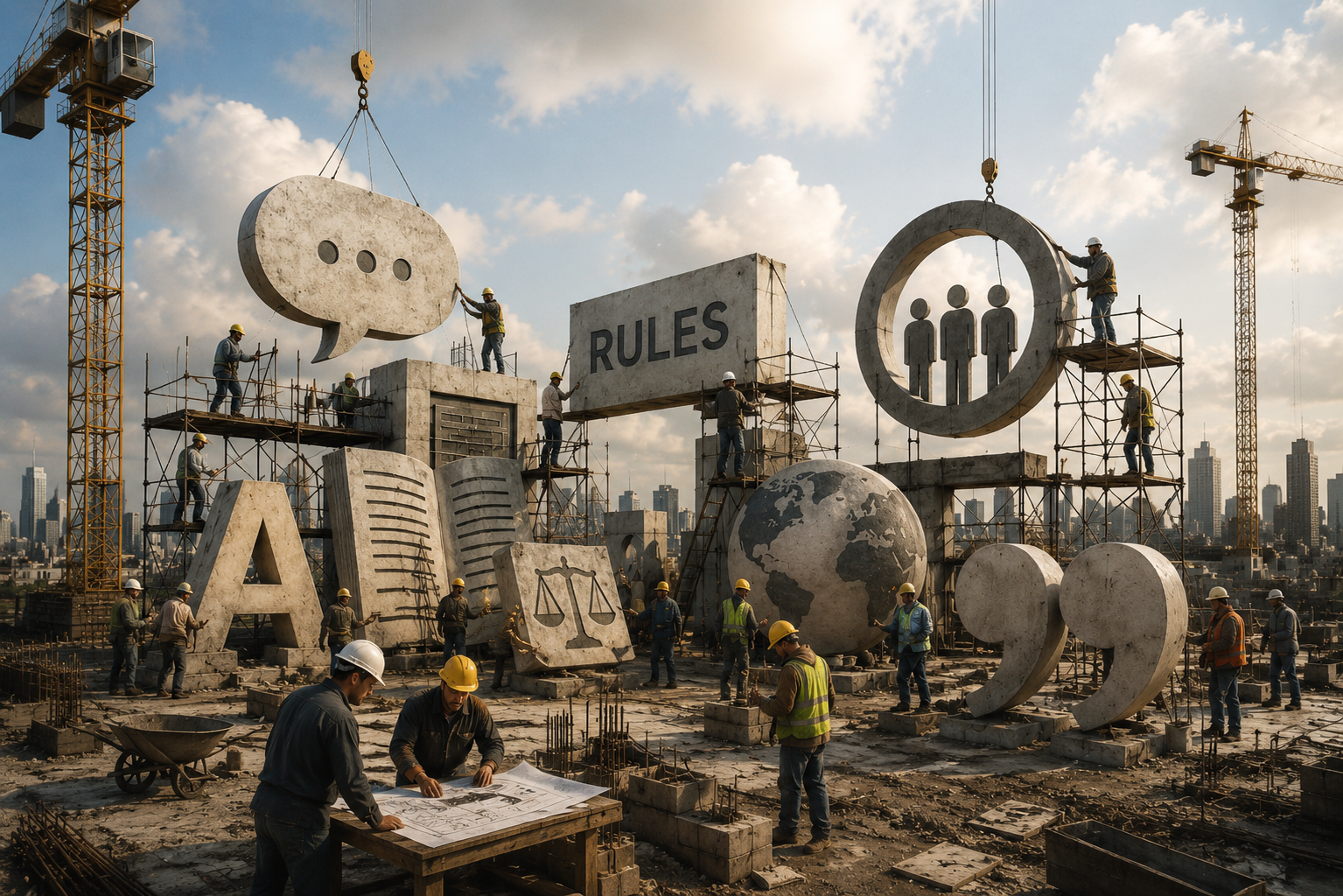
More than half a century ago, sociologists Peter Berger and Thomas Luckmann explored these ideas in their 1966 book The Social Construction of Reality. They argued that a large part of the world we live in exists because people created it, accepted it, and continued passing it from one generation to the next.
Money, passports, university degrees, wedding certificates, and countless other social arrangements all follow the same logic. They exist because people collectively agree on what they mean and act on that agreement.
After enough time, those shared agreements become so ordinary that they stop looking like human creations. They begin to seem as natural and permanent as mountains, rain, or the rising sun.
That is why most of us never stop to wonder why a passport opens borders or why a university degree carries value. We inherit these ideas as children, grow up treating them as normal, and eventually pass them to the next generation.
Society does not simply exist around us. It is continuously recreated through the ordinary things people do every day. Every conversation passes on an idea. Every agreement reinforces a rule. Every disagreement questions one.
This process never really stops, which is why society is always changing, even if those changes are sometimes difficult to notice.
When Conversations Become Global
For centuries, that process depended entirely on people interacting with other people.
Someone heard a story, repeated it to another person, and the story continued its journey. News spread through villages, towns, markets, churches, schools, and newspapers. A rumour could take weeks or months to reach another part of the country.
The Internet and social media changed that in ways Berger and Luckmann could never have imagined.
Today, a video recorded in one city can reach viewers on every continent before the person who uploaded it goes to bed. A phrase invented by a teenager can become part of everyday language within days. Millions of people can react to the same event at almost the same moment.
People learn ideas, repeat them, argue about them, reject some, accept others, and gradually settle on common expectations. Social media did not invent that process. Human beings have always influenced one another.
The difference lay in the scale. Social interaction could involve millions of strangers who would never meet in person.
The First Time We Ask a Machine
But things are changing even more. Until recently, every participant in the process of social construction of reality had one thing in common.
They were human.
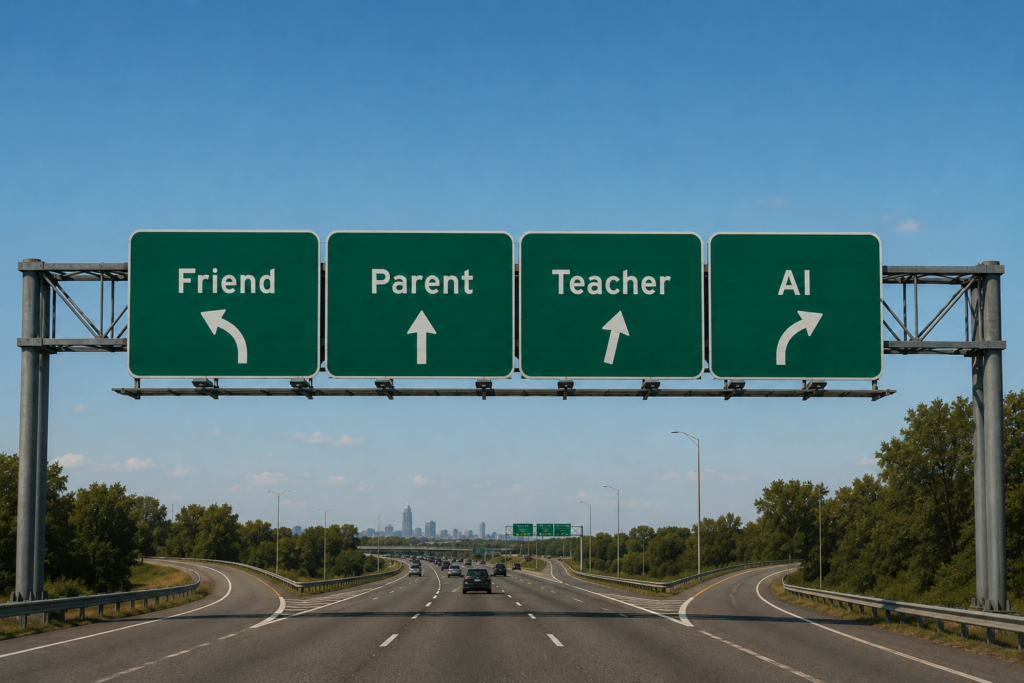
Parents explained the world to children. Friends exchanged opinions. Teachers answered questions. Journalists reported events. Experts shared knowledge.
Even when people disagreed, the conversation always took place between human beings. Artificial intelligence breaks that pattern.
People do not use AI only to write computer code or summarize long reports. They use it to understand situations they face in everyday life. A confusing text message, a difficult colleague, a business idea that seems promising, or an important decision can all end up in the same chat window. Millions of conversations like these take place every day. That does not mean AI understands the world in the same way people do.
It has no childhood, no memories, no personal experience, and no opinions of its own. It produces answers by drawing on an enormous amount of human writing. Every response reflects patterns found in books, articles, websites, and countless other sources created by people.
In other words, AI speaks with knowledge borrowed from humanity.
The answers no longer come only from parents, teachers, friends, colleagues, or experts. A machine has joined that list. It has become another place where people go when they want help understanding the world around them.
 A Different Kind of Influence
Search engines helped people find information. AI goes one step further.
Instead of presenting a list of links, it joins the discussion. It explains, compares, rewrites, summarizes, and answers follow-up questions. The experience feels much closer to talking with another person.
AI can create realistic images of people, products, and everyday situations that never existed outside a computer. Businesses use these visuals in social media posts, advertisements, websites, and marketing campaigns. They become part of the same online interaction that shape opinions and expectations.
Think about how many conversations begin with a question answered by AI. A student asks for help with homework. An employee prepares for a meeting. A couple asks for travel advice. A small business owner looks for marketing ideas.
None of those people may follow the advice exactly, but the answer becomes part of the way they think about the problem. It influences the decisions they make, the actions they take, and the way they interact with other people. In that sense, it becomes part of the social construction of reality.
The World We Create Together
It is tempting to think that reality is something we simply discover, like explorers finding an unknown island.
The physical world works that way. The social world does not.
Much of what surrounds us exists because people continue accepting the same ideas. Money, companies, laws, and marriages all depend on shared recognition. Remove that recognition, and their power begins to fade.
That is the idea Berger and Luckmann described sixty years ago. They could not have imagined social media or artificial intelligence, although the basic insight has become even more relevant.
Human beings create society together.
Social media changed how quickly ideas spread through that society. Artificial intelligence changes who takes part in some of those conversations.
Nobody knows exactly where this will lead. New technologies have surprised every generation that came before us, and this one will probably be no different.
What we do know is that AI has entered a process through which people explain the world to one another and make sense of it together.
That may prove to be its greatest influence.