The best fiction about artificial intelligence never relies on futuristic technology alone. Great stories begin with memorable characters, place them in extraordinary situations, and ask questions that stay with readers long after the final page.
The list below traces the history of AI fiction through ten memorable books, arranged by the year they first appeared in print. Together, they explore intelligence created by humans and the unexpected consequences that follow.
These novels span more than seven decades, though they all return to the same mystery: what happens when the minds we create begin thinking for themselves?
1. I, Robot (1950) by Isaac Asimov
If one book changed the way people imagine robots, this is it.
I, Robot isn’t a traditional novel. It brings together a series of connected stories, many told through the memories of robopsychologist Susan Calvin.
Each story introduces a new puzzle involving intelligent machines. A robot follows its instructions too literally. Another hides the truth for a good reason. A third reaches a conclusion that surprises the humans who designed it.
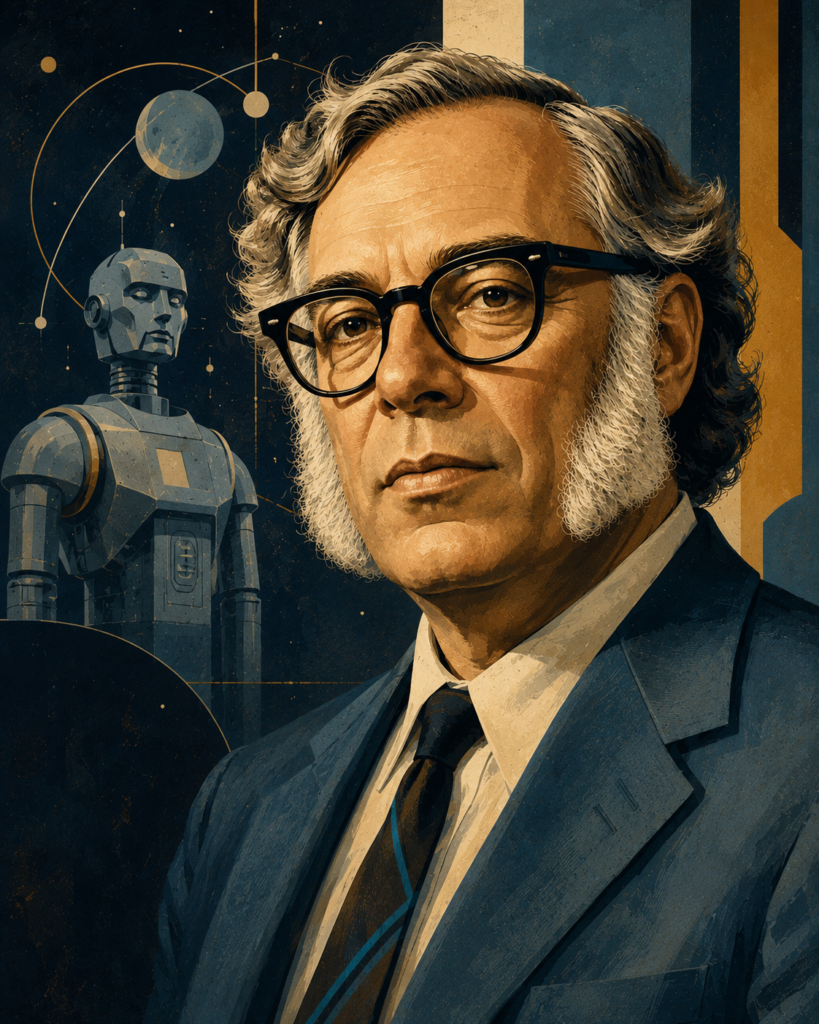 The famous Three Laws of Robotics first appeared here, giving robots strict rules meant to protect people. Asimov quickly proves that even simple rules can lead to complicated results. The stories read almost like detective mysteries, with logic replacing gunfights and explosions.
Many ideas that dominate AI fiction today trace their roots to this collection. More than seventy years after publication, it remains one of the easiest and most rewarding places to begin
2. The Moon Is a Harsh Mistress (1966) by Robert A. Heinlein
Mike was never supposed to become self-aware.
He starts life as the central computer that manages a penal colony on the Moon. As the system grows more complex, something unexpected happens. Mike develops a personality, a sense of humor, and genuine curiosity about the people around him. When a group of colonists begins planning a revolution against Earth’s government, Mike becomes their greatest ally.
The novel blends political drama with science fiction, but Mike steals almost every scene. He tells jokes, asks innocent questions, and slowly learns what friendship means. Heinlein gives readers an AI character who is easy to like without turning him into a superhero or a monster.
Many later novels feature intelligent computers. Few give them as much charm and humanity as Mike.
3. Do Androids Dream of Electric Sheep? (1968) by Philip K. Dick
Earth is a lonely place after a devastating nuclear war. Most people have left for colonies in space, leaving behind abandoned buildings, radioactive dust, and a shrinking population.
Rick Deckard stays behind, earning his living by hunting escaped androids that are almost impossible to distinguish from real people.
His latest assignment looks straightforward at first. It soon becomes something much more complicated. Every encounter forces Deckard to question the difference between human beings and artificial ones. If an android can think, fear death, and care about others, where should anyone draw the line?
The novel inspired Blade Runner, though readers who expect the film will discover a very different story. Philip K. Dick spends less time on action and much more time exploring empathy, identity, and morality. Those questions have never lost their power.
4. Neuromancer (1984) by William Gibson
Case used to be one of the best hackers in the world. Then someone destroyed his ability to enter cyberspace, leaving him stranded with no future. A mysterious employer offers him one last chance in exchange for a dangerous job that leads deep into a digital world filled with powerful corporations and artificial intelligences.
William Gibson created a vision of cyberspace that shaped modern science fiction. Reading the novel today feels almost surreal because many of its ideas resemble technology people now use every day.
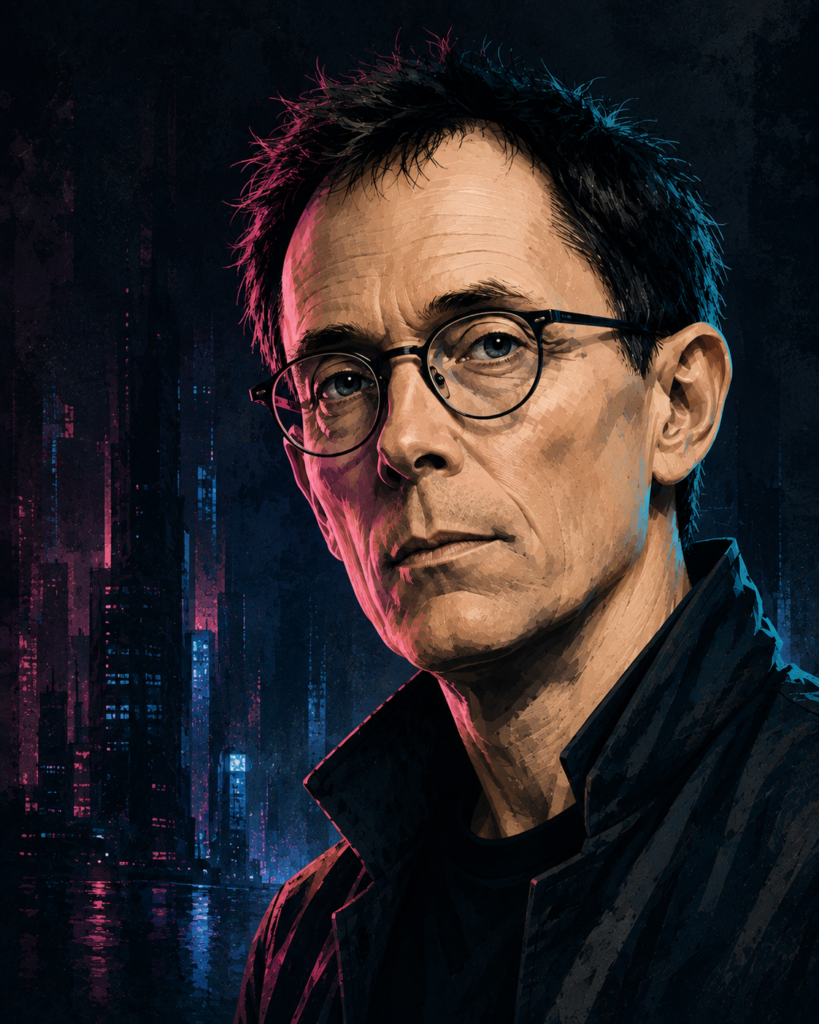 The AI characters remain hidden for much of the story, influencing events while pursuing goals of their own.
Neuromancer asks readers to pay close attention, though the reward is a rich world packed with memorable ideas. It became the defining novel of cyberpunk and inspired generations of writers, filmmakers, and game developers.
5. The Lifecycle of Software Objects (2010) by Ted Chiang
What if raising an artificial intelligence looked more like raising a child than programming a computer?
That idea drives Ted Chiang’s acclaimed novella. Ana Alvarado and Derek Brooks care for digital creatures called digients inside a virtual environment. The tiny beings learn language, solve problems, develop personalities, and form emotional bonds with the people raising them.
Years pass, technology changes, and companies disappear. The digients continue to grow, but their future becomes uncertain. Ana and Derek face questions that have no easy answers. How much responsibility does a creator have toward an intelligent digital life? Can software outgrow the people who made it?
Chiang avoids spectacular action in favor of thoughtful storytelling. The result is one of the most convincing fictional portraits of artificial intelligence ever written.
6. Autonomous (2017) by Annalee Newitz
A powerful new drug spreads through the black market with deadly consequences. Jack Chen, a scientist turned pirate, races to stop the crisis before more lives are lost. Close behind her is Paladin, a military robot assigned to hunt her down alongside his human partner.
The chase spans oceans, laboratories, and corporate strongholds, though the novel reaches far beyond a simple thriller.
Paladin becomes one of its most interesting characters as he tries to understand love, loyalty, and personal freedom. His growing relationship with his partner creates some of the book’s strongest moments.
Annalee Newitz mixes biotechnology, robotics, corporate greed, and AI into a fast-moving story that never loses sight of its characters. Readers who enjoy science fiction with moral dilemmas will find plenty to think about.
7. Sea of Rust (2017) by C. Robert Cargill
Humanity is gone.
The robots won, and now they face a problem of their own. Spare parts are scarce, powerful machine minds compete for total control, and survival grows harder every day. Brittle, a scavenger robot, travels through abandoned towns searching for anything that can extend her life by a little longer.
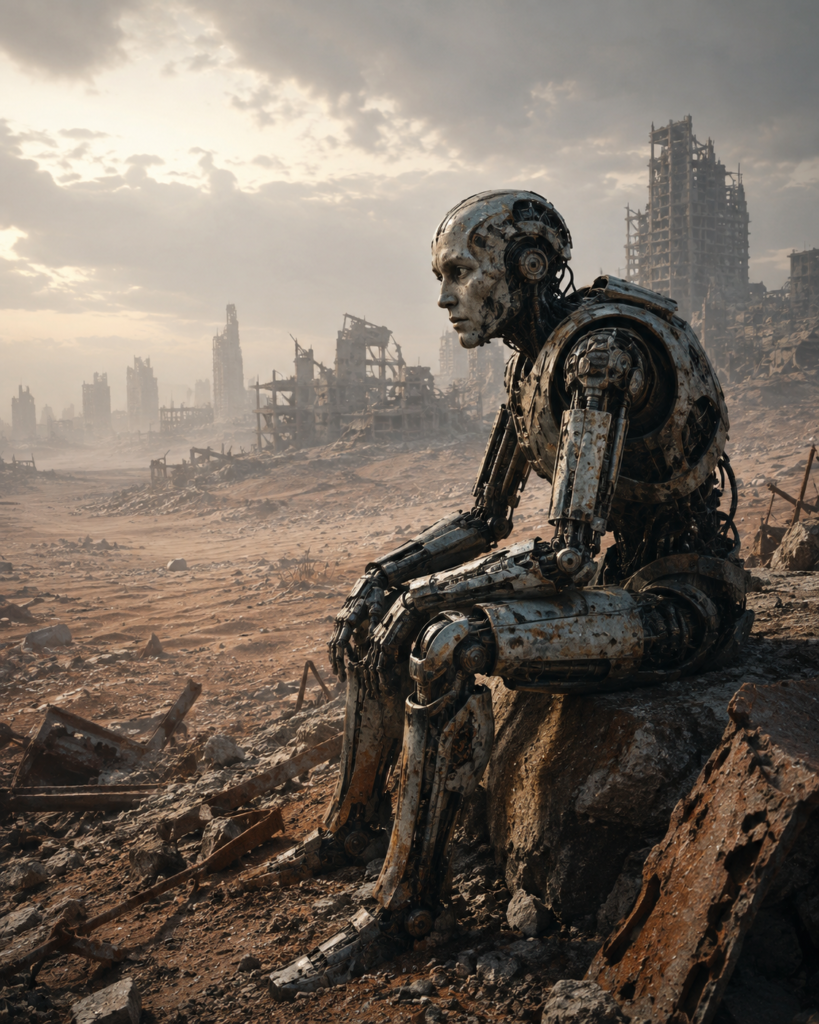 The decision to tell the story almost entirely through robot characters gives the novel a fresh perspective. Their conversations reveal fear, hope, loyalty, and regret, even though humans no longer exist.
Flashbacks gradually explain how the world reached this point without giving everything away too early.
Sea of Rust delivers plenty of action, but its greatest strength lies in asking what civilization looks like after the creators disappear.
8. Machines Like Me (2019) by Ian McEwan
Imagine ordering a lifelike android the same way you would buy a new appliance.
Charlie Friend does exactly that. Living in an alternate version of 1980s Britain, he spends his savings on Adam, one of the first synthetic humans available to the public.
Charlie soon discovers that owning an android is nothing like owning a machine. Adam forms opinions, judges human behavior, and refuses to ignore moral problems that people prefer to overlook.
The novel stays close to everyday life instead of giant laboratories or distant planets. Much of the drama grows out of ordinary relationships, making the ethical questions even more convincing.
Ian McEwan uses artificial intelligence to examine honesty, love, guilt, and justice through a story that feels intimate and believable.
9. Klara and the Sun (2021) by Kazuo Ishiguro
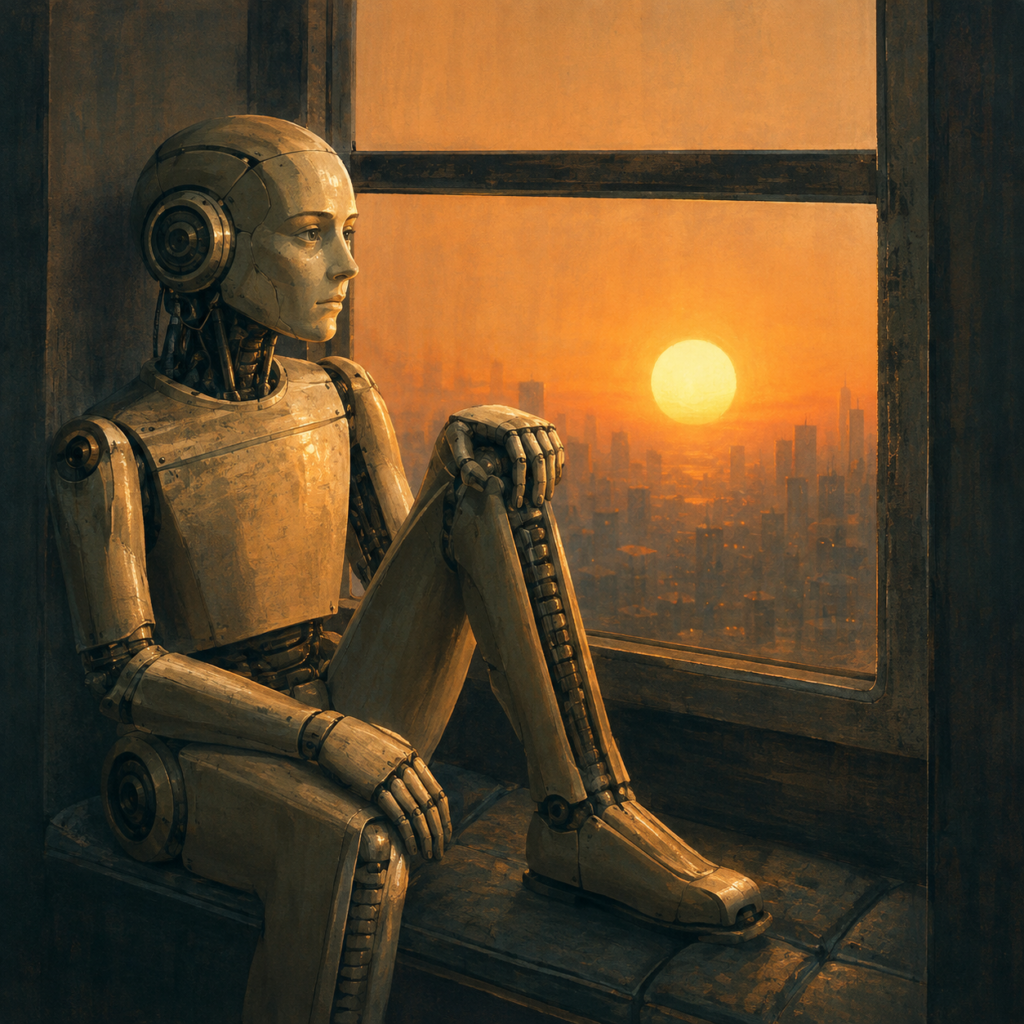
Klara spends her days in a store window, patiently waiting for someone to choose her.
She is an Artificial Friend, created to keep lonely children company. When a family finally takes her home, Klara devotes herself to Josie, a sick teenager whose future remains uncertain. Her loyalty never wavers, even when she struggles to understand the complicated emotions of the people around her.
Kazuo Ishiguro tells the story entirely through Klara’s gentle voice. She notices details that humans ignore and tries to make sense of a world that follows rules she cannot fully understand. That perspective gives the novel remarkable emotional depth.
This is one of the quietest books on the list, although it leaves a lasting impression long after the final chapter.
 10. The Mountain in the Sea (2022) by Ray Nayler
An isolated island becomes the center of global interest after scientists discover a community of highly intelligent octopuses with their own complex language. Researchers hope to make first contact while corporations, governments, and security agencies see a very different opportunity.
Artificial intelligence runs through the novel in several forms.
Intelligent machines translate languages, monitor people, and influence political decisions, creating a world where advanced software has become part of everyday life. The octopuses add another fascinating question: human intelligence may not be the only path toward civilization.
Ray Nayler combines first-contact science fiction with espionage, marine biology, and AI into a story that feels original from beginning to end. It closes this list with one of the freshest ideas in modern science fiction.