
One of the first things I got wrong as a founder was believing that good products naturally find an audience if you explain them well enough. That didn’t feel naive at the time.
Every successful startup blog seemed to tell the same story. They had become experts by teaching what they knew. They answered the questions people were already searching for, invested in SEO, published consistently, and slowly turned their websites into assets that attracted customers around the clock.
It sounded less like marketing and more like delayed gratification. Do the work now, and the results would follow later.
So I committed to it.
I spent evenings reading about keyword research because everyone agreed that writing should begin there, not with the article itself.
I learned the difference between short-tail and long-tail keywords, convinced that targeting smaller, more specific searches would give a new website a chance to compete.
All the guides stressed the importance of understanding search intent, so I stopped thinking about what I wanted to write and started thinking about what somebody else might type into Google.
Writing was only the beginning. I rewrote headlines because title tags supposedly influenced rankings. I added H2 and H3 headings because structure helped both readers and search engines. I broke paragraphs into smaller chunks because people skim online. I inserted bullet lists where they seemed appropriate because every content guide recommended them.
I compressed images, linked articles together, cited external sources, watched page speed scores, rewrote meta descriptions, experimented with calls to action and built topic clusters because authority, I was told, grows page by page.
Whenever I found another recommendation, I adopted it.
Publish consistently. Update old articles. Answer questions completely. Cover related topics. Use data. Create visuals. Write for humans, but don’t forget search engines.
Everything sounded sensible, and I genuinely became better at all of it. The website didn’t.
Every Morning Ended The Same Way
I developed a habit that probably looked familiar to anyone trying to grow something online.
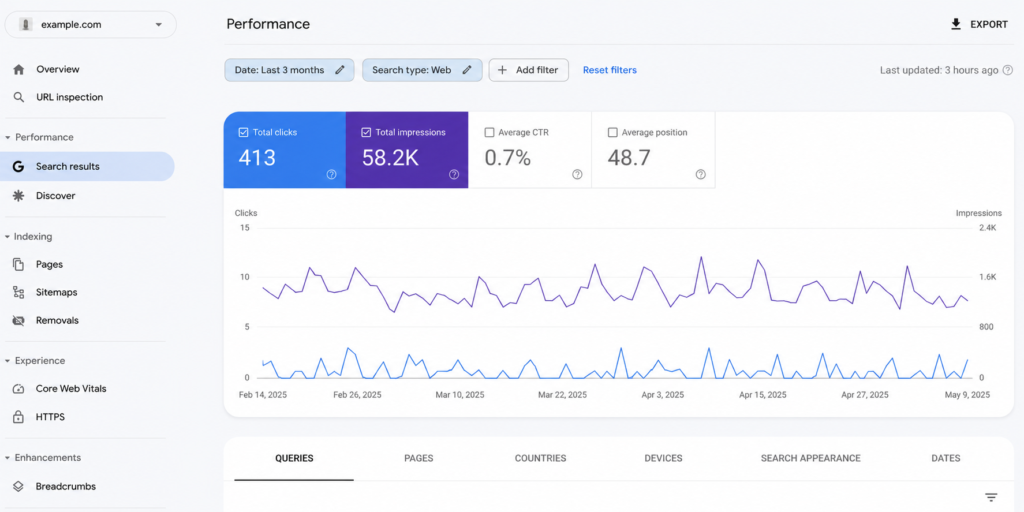
Before checking customer emails, looking at product usage or opening my task list, I opened Google Search Console.
I wasn’t looking for miracles. I only wanted evidence that the process was working.
Five clicks yesterday. Four today. Six the day after.
If I switched from seven days to twenty-eight, the graph looked slightly healthier. If I zoomed out even further, I could almost convince myself that steady progress was hiding somewhere inside the noise.
The numbers weren’t completely flat, which somehow made them harder to interpret. If nobody had visited the site at all, I might have abandoned the strategy much sooner. Instead, there was always just enough movement to believe the next article would make the difference.
So I wrote another one. Months passed this way.
Building a startup means accepting that almost everything takes longer than expected. What bothered me was the growing gap between effort and outcome. I wasn’t publishing random thoughts and hoping Google rewarded persistence. I was following the playbook as carefully as I knew how.
Good advice can remain good advice while being completely unsuited to your situation. It took me a long time to understand that.
 The More Marketing I Learned, The Less I Understood Why Nobody Could Find Me
Eventually I stopped reading articles about SEO techniques and started paying attention to the companies writing them.
Most of the advice I had been following came from businesses with enormous advantages that had nothing to do with the article itself. They had domains that search engines had trusted for years. They had newsletters reaching hundreds of thousands of subscribers. They had customers searching for them directly, journalists quoting them and countless websites linking back to their content.
When they published a new article, they weren’t introducing themselves to the internet. The introduction had happened years earlier.
I had assumed their blogs explained how companies become visible. In reality, many of them explained how visible companies continue growing.
Those aren’t the same problem.
Imagine asking a restaurant that has had queues outside the door for ten years how to attract customers. The owner might tell you that consistent quality is the secret, and they wouldn’t be wrong.
That advice doesn’t answer the question the new restaurant is asking. Its problem isn’t how to retain customer, but to persuade the first person to walk through the door.
Looking back, I realised I had been copying companies that were solving a completely different marketing challenge.
Their audience already existed. Mine didn’t.
Somewhere Along The Way, Content Became Confused With Distribution
For a long time I believed that if I kept producing useful content, visibility would eventually follow.
That belief was reinforced almost everywhere I looked because content is tangible. You can count blog posts, keywords, backlinks and impressions. You can improve headlines, shorten paragraphs, add diagrams and rewrite introductions. There is always another article to optimise.
The irony is that creating content has never been easier. AI has removed much of the repetitive work that used to consume hours every week, especially for small teams trying to stay active on social media and other channels. I don’t see that as making content less valuable. If anything, it raises the bar. When publishing becomes easier for everyone, the advantage shifts toward having something original to say and a deliberate way of getting it in front of people.
Distribution is much harder to see.
Nobody publishes a checklist explaining how to earn credibility when nobody knows your company exists. There isn’t a plugin for becoming part of conversations people are already having. There isn’t a framework that guarantees someone influential shares your work.
Distribution is messy because it depends on relationships, timing, curiosity, communities and ideas that are interesting enough for someone else to pass along.
Good content gives people a reason to care once they find you. Distribution gives them a chance to find you in the first place. You need both, but I spent months treating one as if it automatically produced the other.
I don’t think I’m alone.
The startup world has become remarkably good at teaching founders how to create content. It spends far less time discussing how unknown companies become visible, or why one article gets shared while another disappears without a trace.
The Most Interesting Things I Had To Say Were Never Found In Keyword Research
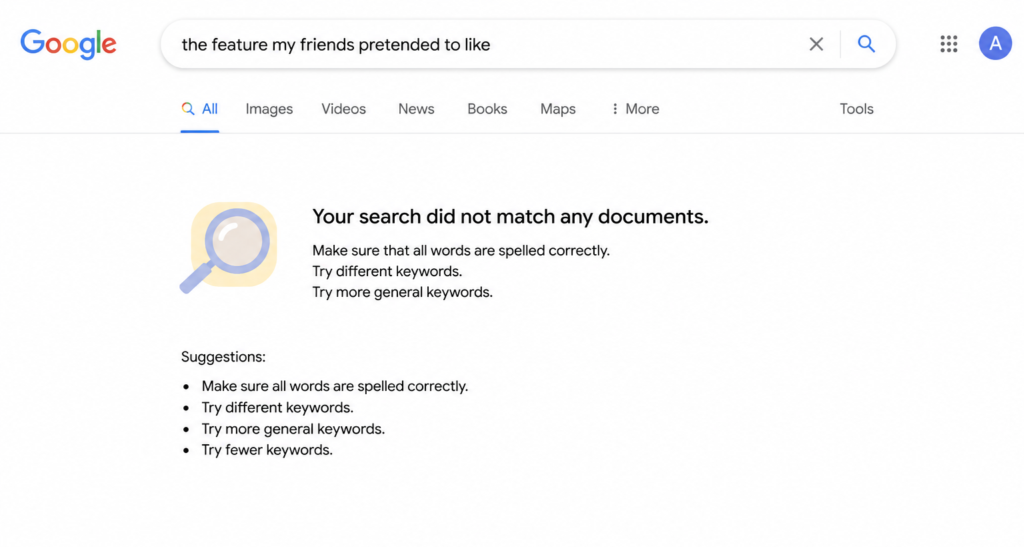
The articles I cared about most weren’t the ones that perfectly matched a search query, but the ones rooted in something I had actually experienced.
A failed launch. An experiment that produced the opposite outcome I expected. A customer conversation that changed how I thought about the product.
Those pieces contained something nobody else could publish because nobody else had lived through the same events.
 Large companies rarely write this way.
They don’t lack interesting stories, but they do have many reasons to avoid telling them. Every public statement passes through layers of review, legal considerations and brand guidelines. By the time an article reaches the company blog, uncertainty has usually disappeared.
Founders have a different advantage.
We can write before every rough edge has been polished away. We can admit we don’t fully understand something. We can document an experiment without pretending it produced a neat conclusion.
Ironically, that makes the writing more useful.
People don’t remember another comprehensive guide explaining concepts they have already read elsewhere. They remember evidence and honesty. They remember someone describing what actually happened.
I No Longer Think Small Startups Lose Because They Don’t Have Enough Money For Marketing
Money changes what is possible. A larger budget buys advertising, partnerships, sponsorships and experienced people.
I don’t want to pretend those advantages don’t exist. But when I think about my own mistakes, I don’t see a budget problem. I see a strategy problem.
I borrowed a marketing strategy from companies that had already won the battle for visibility.
They invested in content because millions of people already knew where to find them. I invested in content because I hoped it would help people discover me.
The activities looked identical. The circumstances couldn’t have been more different.
Today I spend much less time thinking about the next keyword to target and much more thinking about why anyone would care enough to share an idea in the first place. That question has changed the way I think about marketing. It has pushed me toward writing about experiments instead of theories, experiences instead of summaries, observations instead of recycled advice.
I don’t regret learning SEO or writing all those articles that attracted almost nobody. Without them I probably wouldn’t have realised that creating content and becoming visible are two different problems.
That distinction seems obvious now.