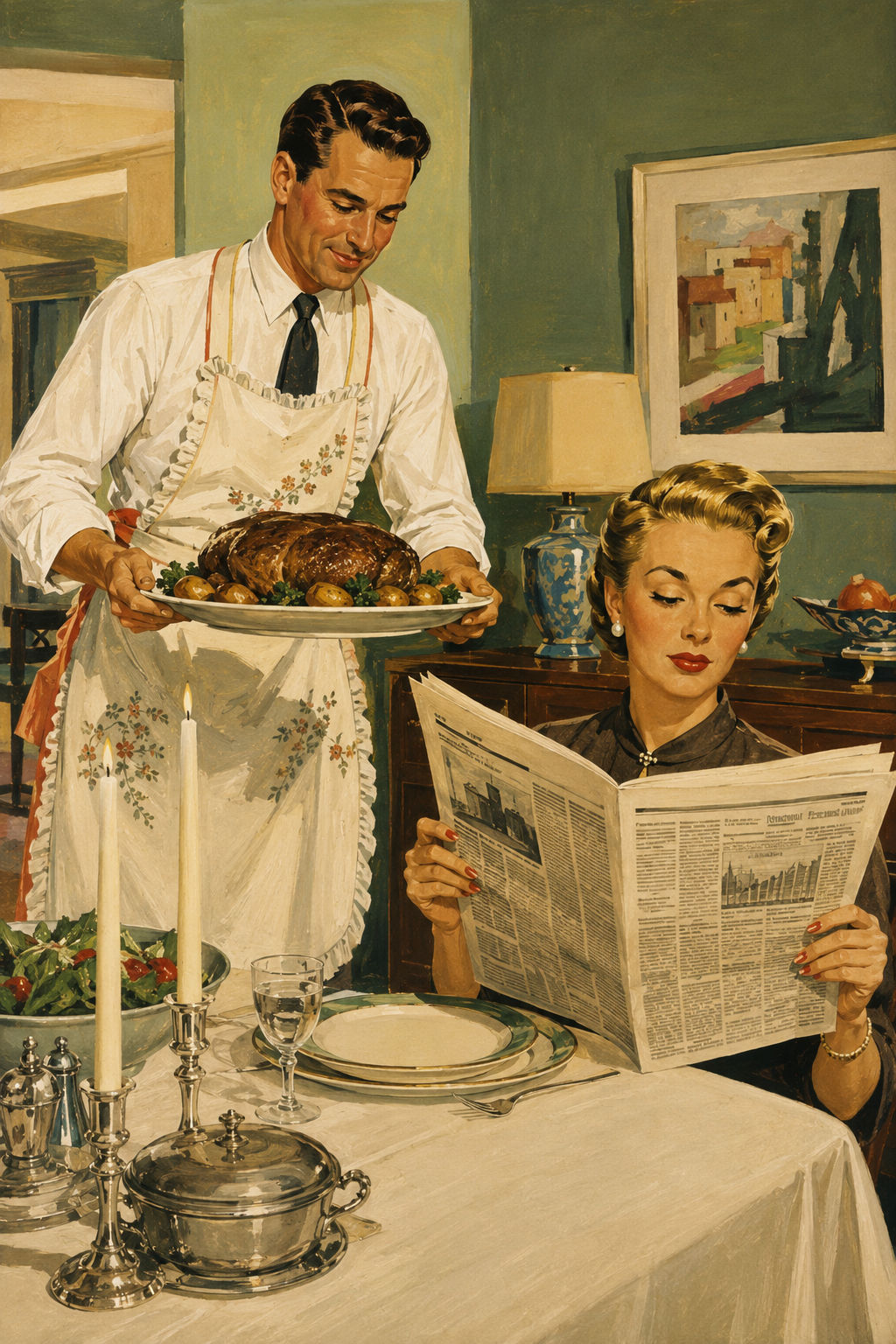
Marketing has a powerful influence on how people see the world. Every day, consumers watch ads, scroll through social media posts, and browse online stores filled with images and messages about products.
Some of those messages use gender stereotypes. They present men and women in narrow, predictable ways because marketers believe these portrayals are easy to recognize and easy to sell.
This approach is common, but audiences have changed. People expect brands to reflect real life instead of falling back on outdated beliefs. A campaign that feels harmless to one group may come across as lazy or offensive to another. That can damage a company’s reputation and make customers lose interest.
Gender stereotypes in marketing are not always evident. Some appear in product design, others in advertising, and many are embedded in the language brands use every day. Understanding how these stereotypes work helps marketers create campaigns that connect with more people without resorting to familiar clichés.
What Are Gender Stereotypes and Why Are They Used in Marketing?
Gender stereotypes are general ideas about how men and women are expected to look, behave, or spend their money. In marketing, brands use these ideas to shape products, advertisements, and promotional messages.
Advertisers have long used stereotypes because they make messages easy to understand. A customer could look at a product or commercial for a few seconds and immediately know who it was supposed to appeal to.
- Softer typography and pastel colors suggested a product was for women.
- Dark colors and bold language suggested it was for men.
- Household products usually featured mothers
- Car commercials focused on fathers or young men.
This strategy reflected the social norms of the time. As society changed, many campaigns continued using the same formula, even though consumers no longer saw themselves in those narrow roles.
The problem starts when stereotypes replace reality. People have different interests, careers, personalities, and lifestyles. A single image of what a man or woman should be leaves many customers out of the conversation.
Some stereotypes are obvious, while others are subtle. An advertisement may avoid direct statements about gender but communicate the same message through visual cues, casting choices, or product placement.
The Most Common Gender Stereotypes Used in Marketing
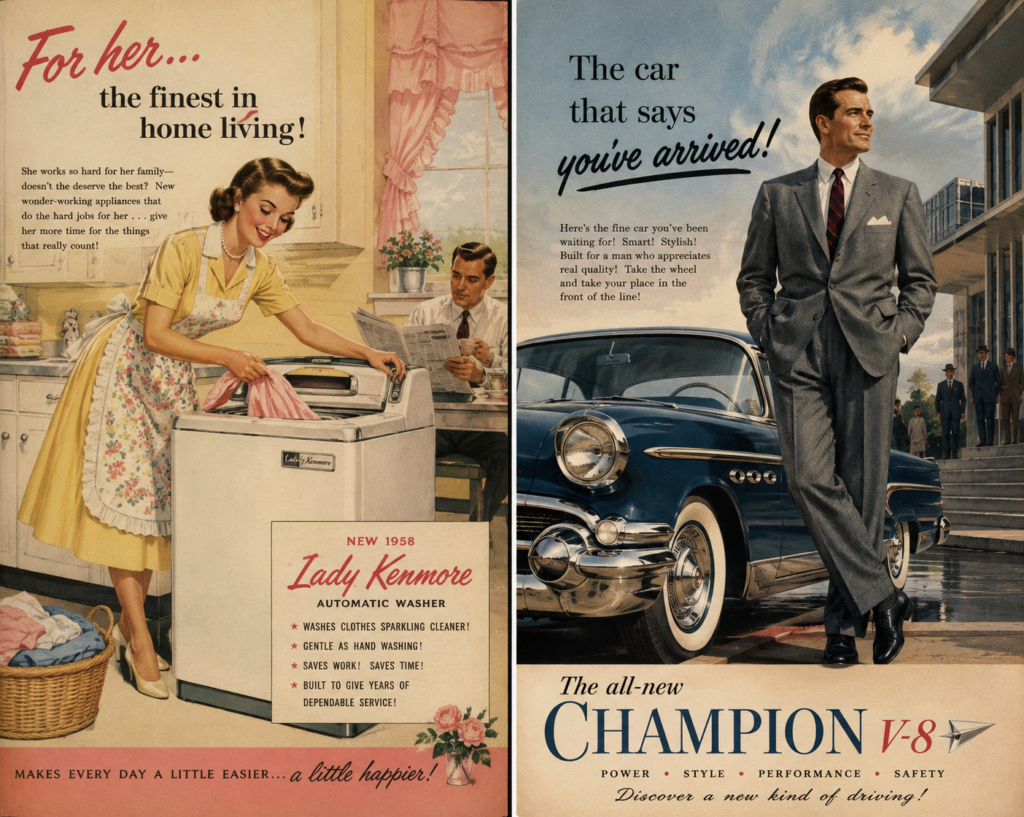 Many stereotypes have survived because they are easy to recognize. That does not mean they reflect how people actually live.
Women are frequently portrayed as primary caregivers, responsible for housework and focused on beauty and appearance.
Cleaning products, kitchen appliances, and children’s items have long featured these portrayals.
Beauty campaigns also tend to emphasize youth, slim body types, and flawless skin, creating unrealistic expectations.
Another common example is the idea that women shop mainly for fashion or cosmetics.
While these industries have many female customers, the stereotype overlooks the wide range of interests, hobbies, and purchasing decisions women make every day.
Men are often presented as strong, independent, competitive, and emotionally reserved. Advertisements for cars, technology, financial services, and sports equipment center their messaging on these characteristics.
Some campaigns also suggest that asking for help or showing emotion is a weakness. This portrayal ignores the fact that modern audiences increasingly respond to authentic, well-rounded characters rather than outdated ideals of masculinity.
New Stereotypes in Digital Marketing
Digital platforms have changed the way brands communicate, but they have not eliminated stereotypes.
Influencer campaigns sometimes reinforce traditional gender roles through fashion, fitness, parenting, or luxury content. Recommendation systems can also amplify existing patterns by repeatedly serving similar content instead of encouraging broader interests.
For example, if someone regularly interacts with beauty content aimed at women, algorithms may continue recommending similar material while rarely introducing content related to technology, finance, travel, or other interests that fall outside the established pattern.
How Gender Stereotypes Influence Consumers
Advertising does more than sell products. It also shapes expectations.
Children begin to recognize marketing messages at an early age. Repeated exposure to similar images influences what they think boys and girls should like, wear, or do. These ideas can stay with people long after childhood.
Adults are influenced as well. Marketing affects how consumers judge brands, products, and even themselves.
When people rarely see someone like themselves in advertising, they may feel overlooked. By contrast, brands that represent people with different lifestyles, appearances, and experiences are more likely to connect with a broader audience.
Gender stereotypes also influence buying decisions. Some customers avoid products because they appear to be designed for another gender, even when the product itself has no meaningful connection to gender.
Personal care products provide a clear example. Razors, body wash, and deodorant often come in separate versions for men and women, even though the main differences are frequently limited to fragrance, packaging, and advertising.
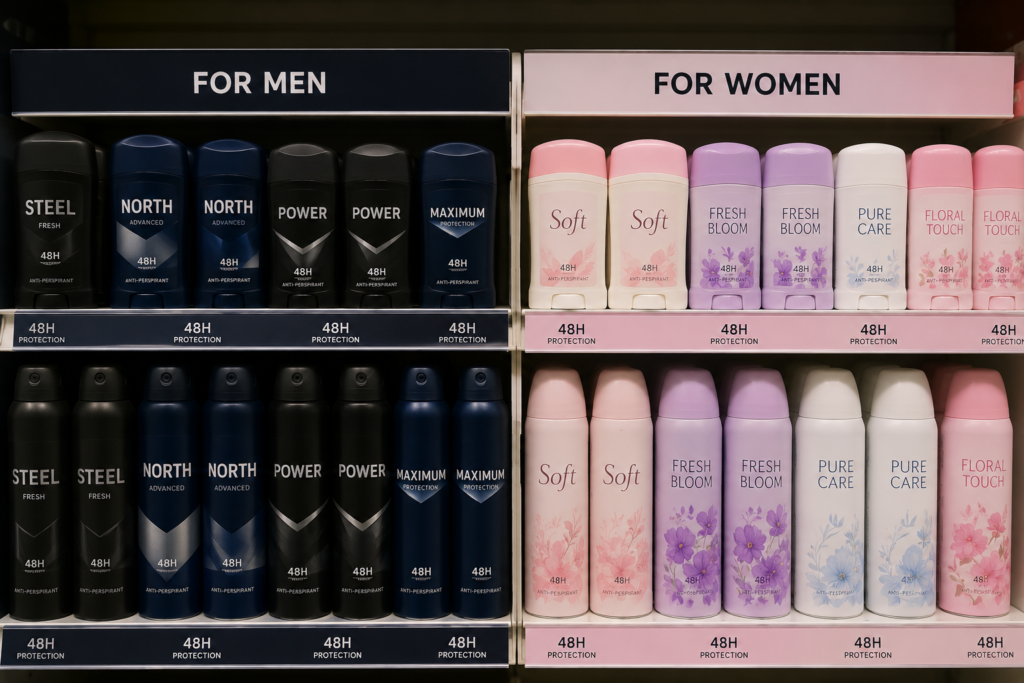 This approach can increase sales in the short term because it encourages people to buy products marketed specifically to them. Over time, however, many consumers begin to question whether the distinction is necessary at all.
Brands That Got It Right and Wrong
Real campaigns show how quickly public opinion can reward thoughtful marketing—or criticize outdated thinking.
Dove – Expanding the Definition of Beauty
Dove’s Real Beauty campaign challenged the beauty standards that dominated advertising for years. Instead of professional models, the brand featured women of different ages, body types, and backgrounds.
The campaign encouraged conversations about confidence and self-image rather than promoting a single definition of beauty.
The campaign earned praise because many consumers saw people who looked more like themselves. It also proved that a brand could succeed without promoting unrealistic beauty standards or a narrow definition of attractiveness.
Always – #LikeAGirl
The #LikeAGirl campaign questioned a phrase that many people had used as an insult for years.
The advertisement asked children and adults to demonstrate what it meant to run, throw, or fight “like a girl.” Younger girls completed the tasks with confidence, while many older participants acted out negative stereotypes.
The message was easy to understand because it challenged an everyday expression instead of attacking the audience. The campaign became one of the best-known examples of advertising that encouraged people to rethink long-held beliefs about gender.
Bic for Her – A Product Nobody Asked For
Bic introduced Bic for Her, a line of pens designed specifically for women. The pens looked different, but they worked like ordinary pens already on the market.
Consumers quickly mocked the product because many saw it as an unnecessary attempt to divide a simple everyday item by gender. Online reviews turned into jokes, and the campaign became a well-known example of gendered marketing that missed the mark.
The problem was not the pen itself. It was the belief that women needed a separate version of a product that already served everyone.
Dr Pepper Ten – “It’s Not for Women.”
Dr Pepper promoted its low-calorie soft drink with the slogan “It’s Not for Women.” The campaign targeted men who avoided diet drinks because they considered them feminine.
The advertisement attracted plenty of publicity, but it also faced criticism for reinforcing outdated ideas about masculinity. Instead of expanding the brand’s appeal, the message divided potential customers and strengthened stereotypes that many people had already rejected.
Inclusive Marketing Strategies
Inclusive marketing does not require brands to remove gender from every campaign. It starts with a better understanding of the people who buy the product and a willingness to question long-standing habits.
Research almost always provides stronger insight than stereotypes. Shopping habits, interests, lifestyle, age, purchase history, and even the way customers interact with a brand online reveal far more about an audience than gender alone.
- a sportswear brand may discover that its most engaged customers are people who enjoy outdoor activities, regardless of gender.
Building campaigns around shared interests is far more effective than assuming all men or all women respond to the same message.
Visual representation i salso important. Advertisements should reflect the variety of people who actually use a product. That does not mean every campaign has to include every possible group. It means the people featured should genuinely represent the brand’s audience.
- a home improvement campaign can naturally include both women and men completing DIY projects, while a financial services ad can show different ages, professions, and family situations instead of repeating the same traditional roles.
 The language brands use matters just as much as the visuals. Small wording choices can unintentionally signal that a product is meant for one gender when it is actually suitable for everyone.
- describing a backpack as “rugged” instead of “built for men,” or skincare as “effective for active lifestyles” rather than “designed for women,” keeps the focus on the product’s benefits instead of gender labels.
AI has made this process easier. Platforms such as Stryng generate social media content after analyzing a webshop and brand information, but one of the biggest advantages comes before any content is created. Users can guide the AI with prompts, brand values, target audience insights, and messaging preferences that help steer the content away from stereotypical portrayals from the outset.
Instead of correcting biased messaging after it has been generated, marketers can shape the direction of the content from the beginning. Human review remains an important final step, allowing users to refine copy, visuals, or tone before anything goes live.
Ask questions such as:
- Does this campaign reflect real customers, or an outdated stereotype?
- Is the audience based on customer research or on broad generalizations?
- Would the message still make sense if the genders were reversed?
- Does the language focus on product benefits instead of gender labels?
- Could any visuals or examples unintentionally exclude people who would realistically use this product?
These questions take only a few minutes, but they can significantly improve the quality of a campaign, reduce the risk of unnecessary criticism, and help brands build stronger relationships with a broader audience.
The Future of Gender Representation in Marketing
Consumer expectations continue to evolve, and brands need to evolve with them.
Younger audiences expect advertising to reflect the diversity they see in everyday life. They recognize stereotypes more quickly than previous generations and are far more likely to discuss campaigns online. Positive reactions can spread rapidly, but so can criticism when a campaign feels outdated or inauthentic.
Artificial intelligence will also play a growing role in the future of marketing. More companies are using AI to create images, videos, and marketing copy. AI learns from existing data, meaning it can unintentionally reproduce historical biases or familiar stereotypes if marketers do not provide clear guidance and review the output critically.
Gender stereotypes will probably never disappear completely. People naturally recognize familiar patterns, which is one reason advertisers have used them for decades.
The strongest campaigns, however, reflect real customers instead of outdated stereotypes or one-dimensional thinking. Brands that understand their audience and treat people as individuals rather than categories are far more likely to build lasting loyalty than those that continue to fall back on familiar clichés.