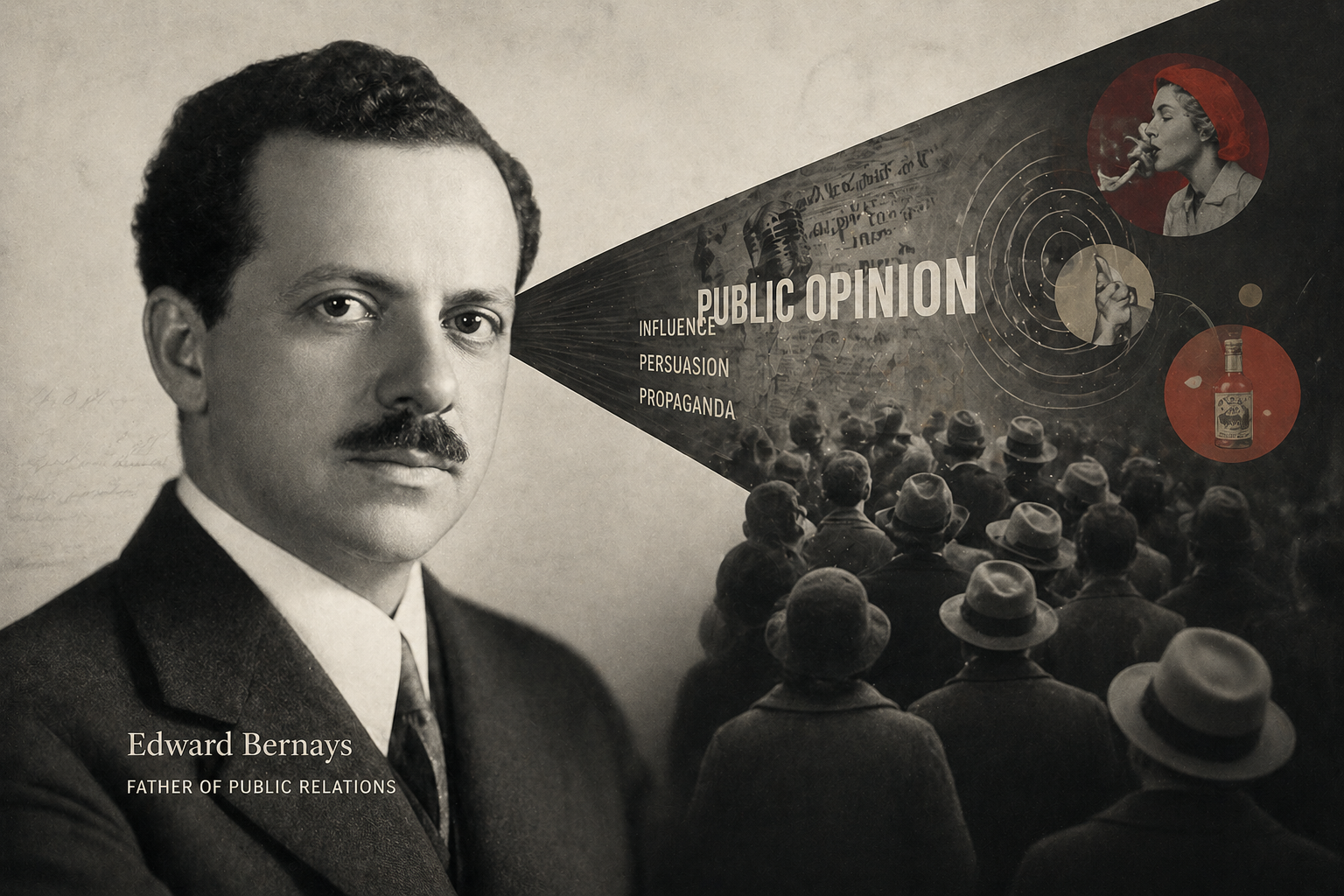
In 1929, a group of women walked down a street in New York during an Easter parade. At a planned moment, they stopped, took out cigarettes, and lit them in public view. For many watching, the gesture carried a clear message. It signaled independence and a break with social limits that had discouraged women from smoking outside private spaces.
The scene looked spontaneous. But, it was carefully arranged. The press had been alerted in advance. Photographs were taken and published soon after. The act entered public conversation as a symbol, something more than a simple event.
Behind it was Edward Bernays. He believed public opinion could be guided through connection with emotion and identity. His ideas and campaigns, which connect products with emotion and identity, represent the roots of modern marketing.
A Different Way of Thinking About Public Opinion
Edward Bernays was born in 1891 in Vienna and later worked in the United States. He was a nephew of Sigmund Freud.
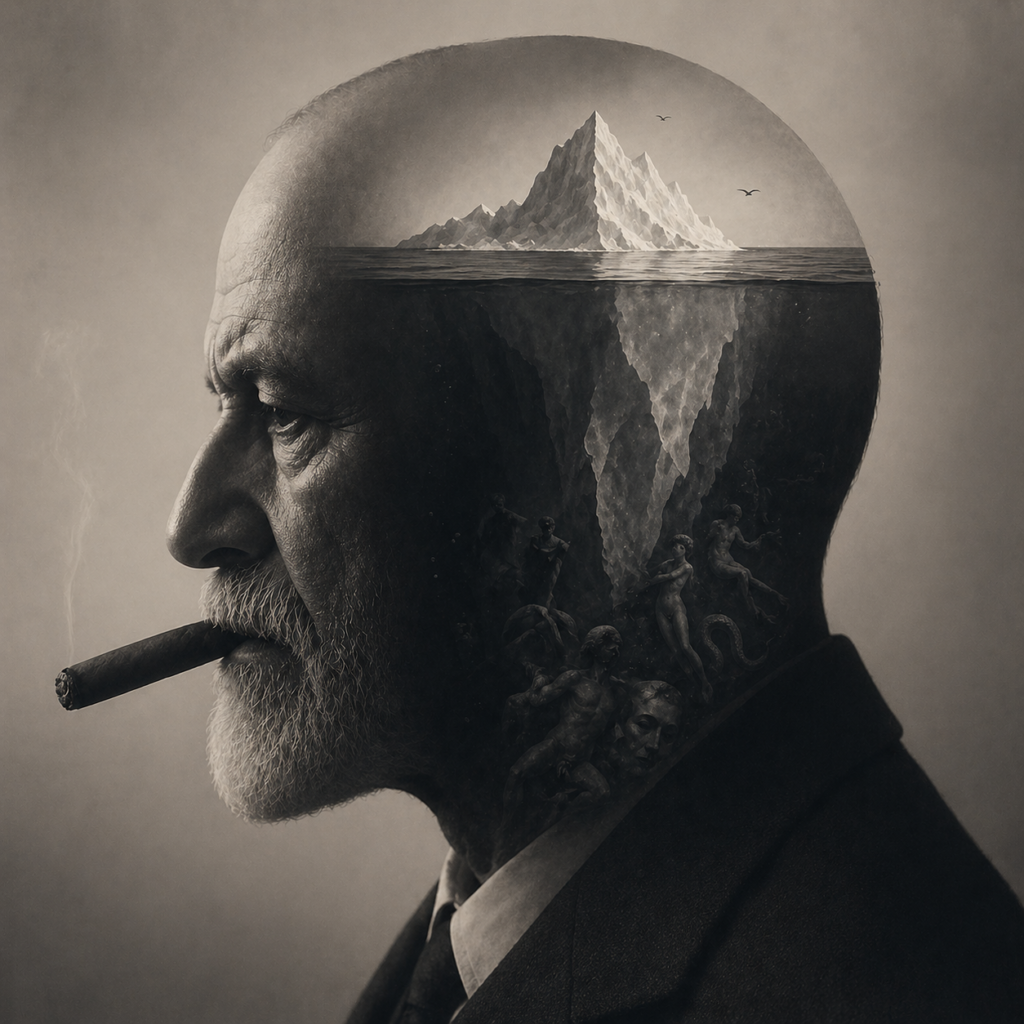
Freud’s work explored how human behavior is influenced by hidden motives and emotions: Bernays saw a practical use for these ideas.
He treated public opinion as something that could be studied and guided. Instead of presenting facts and waiting for a response, he designed campaigns that connected with deeper impulses. If human behavior is shaped by unconscious forces, then messages can be crafted to appeal to those forces.
This meant looking at questions such as:
- What does a product represent to people?
- What social meaning can be attached to it?
- How can a simple act be turned into a symbol?
In his early career, Bernays worked with theater productions and publicity campaigns. These experiences showed him how public interest could be generated through careful planning.
 From Publicity to Public Relations
Before Bernays, publicity focused on attracting notice. It relied on headlines, events, and promotion. Bernays moved beyond this model. He introduced the idea that public opinion could be guided through a deeper understanding of human psychology.
He used the term “public relations” to describe this broader practice. For him, it involved studying audiences, crafting messages, and creating situations that would influence how people think and act.
One of his key ideas was that people do not always make decisions based just on facts. Emotions, habits, and social influences also play a role. This meant that communication should speak to those elements, instead of presenting information alone.
The Role of Media and Authority
Bernays understood the influence of media long before the digital age. He recognized that newspapers, magazines, and other channels could shape public perception on a large scale.
He also understood the value of authority. Messages carried more influence when they came from trusted figures such as doctors, experts, or public leaders.
Bernays used these insights in many of his campaigns. He did not rely on a single message. He created a network of signals that reinforced each other.
This method gave his work a lasting impact.
Criticism and Ethical Questions
Bernays’ ideas were influential, but they also raised concerns. Critics argued that his methods could be used to manipulate public opinion without people being fully aware of it.
His book Propaganda, published in 1928, described how public opinion could be shaped in democratic societies. He presented this process as a necessary part of modern life, given the complexity of large populations.
Some readers saw this as a realistic description of communication. Others viewed it as a warning about hidden influence.
Torches of Freedom
The Easter parade event became one of Bernays’ best known campaigns. At that time, women smoking in public faced strong disapproval. Bernays worked to change that perception.
He organized a group of women to light cigarettes during the parade and framed the act as a statement of independence. The phrase “torches of freedom” linked smoking with a broader idea of equality.
Newspapers covered the event, and the images spread widely. The message did not focus on the product itself: it focused on what the act represented.
This campaign shows how a product can be tied to identity. Smoking became associated with a sense of autonomy, more than a personal habit.
Ivory Soap and Children’s Play
Bernays promoted Ivory Soap through a famous campaign. Instead of focusing on cleaning, he connected the soap with play and creativity.
He organized soap carving competitions for children. Schools and communities took part, and the activity gained media coverage. Children used the soap to create small sculptures, turning a simple object into something engaging.
This idea reached families through participation. Parents bought the product for its practical use, and also because it became part of an activity their children. The campaign linked the product with positive experiences.
Books and Social Status
Bernays also explored how products become connected with identity. One example involved books.
He encouraged the idea that owning books could reflect intelligence and cultural awareness. This connection gave books a social meaning beyond reading.
The effect can be seen in simple situations:
- A person displays books at home as part of their environment
- A collection of titles suggests education or curiosity
The product becomes a signal. People may purchase books for content, as well as for what they represent.
This idea has continued into modern marketing. Many products are associated with identity beyond their basic use.
Bacon and Eggs
The bacon and eggs campaign changed the morning routine of millions of Americans. Bernays collaborated with a food company that wanted to increase sales of bacon.
At the time, many people ate light breakfasts. Bernays consulted doctors and asked whether a heavier breakfast could be beneficial. Many agreed that a substantial meal in the morning could have advantages.
This opinion was shared through newspapers and reports. The idea of a hearty breakfast gained acceptance, and bacon with eggs became part of that image.
The campaign did not present itself as advertising. It came through expert opinion and health advice. Over time, a new habit took hold.
United Fruit and Public Opinion
Consumer products were only part of Bernays’ career. He later turned similar methods toward United Fruit Company, a large corporation with business interests in Central America.
During the 1950s, Guatemala introduced land reforms that threatened the business interests of United Fruit Company. Bernays worked to influence how American media described the situation. Reports and public discussion increasingly presented Guatemala’s government as politically dangerous during a period of strong anti-communist sentiment in the United States.
This example shows how the same methods used in product promotion can extend into political and social issues. The scale is different, but the principle remains similar: guide perception through carefully constructed messages.
What Bernays Left Behind
The roots of modern marketing can be traced through these campaigns. Each example shows a similar pattern: connect a product or idea with emotion, identity, or social meaning.
Bernays treated communication as a structured activity. He combined psychology, media, and public perception into a single process.
Understanding his work shows how messages can guide perception in ways that are not always obvious.
Today, these ideas remain visible in many forms:
- Products linked with lifestyle and identity
- Messages framed through expert voices
- Campaigns designed to influence habits
Tools have changed, but the underlying logic remains close to what Bernays explored. He did not rely on a single message: he arranged a sequence of signals that reinforced each other over time.