The quickest way to beat holiday burnout is to stop pretending the season will magically manage itself.
The calendar fills up, expectations pile on, and simple choices begin to feel heavy.
This guide unpacks why that happens and how anyone can simplify, set kinder guardrails, and still enjoy the moments that matter.
It draws on holiday survival lessons from real people that work hard and care for families at the same time.
The Psychology Behind Holiday Unreadiness
Temporal Myopia – Living for Today
People plan with good intentions, then future plans lose power in the moment. Behavioral economists call this present bias. It is the tendency to favor immediate comfort over larger future benefits, which explains last-minute shopping, skipping meal prep, and saying yes to one more party.
One way to counter it: shrink the time horizon. Convert a month-long project into single-session tasks that take 20 to 40 minutes. The brain treats “do this today” very differently from “have this finished by the end of the month.” Commitment devices help too, like pre-scheduling gift orders and blocking time on a calendar before competing invites arrive.
Social Pressure and the Comparison Trap
The season also amplifies social comparison. Highlight reels dominate feeds. Apartments must look like home magazine spreads. Small deviations feel like failure.
Experimental evidence suggests that reducing social media time lowers depressive symptoms, which often spike when comparisons escalate during holidays.
Practical takeaway: set short app timers and move the phone away during prep sessions. Quiet time restores attention and separates personal values from performative expectations. It also opens space for low-stakes joy such as a walk, a board game, or calling a friend.
Decision Fatigue and How to Beat Holiday Burnout
As choices stack up, quality drops. Decision fatigue nudges people toward default picks, impulse buys, and overeating by evening.
A recent systematic review across healthcare settings found consistent decision fatigue effects in diagnostic, prescribing, and therapeutic decisions, underscoring how mental depletion weakens judgment in high-stakes work.
For many working people – store owners, for example – fewer decisions during crunch time means more time and energy for customers and family.
Some lean on tools that take everyday marketing tasks off their plate, keeping things moving without demanding extra focus. Stryng works in this way, smoothing out the tasks that frequently pile up and drain momentum. It doesn’t feel like delegation as much as relief: the sense that the next step is already prepared, waiting to be approved with a clear mind.
This way, it becomes easier to stay present where it truly matters.
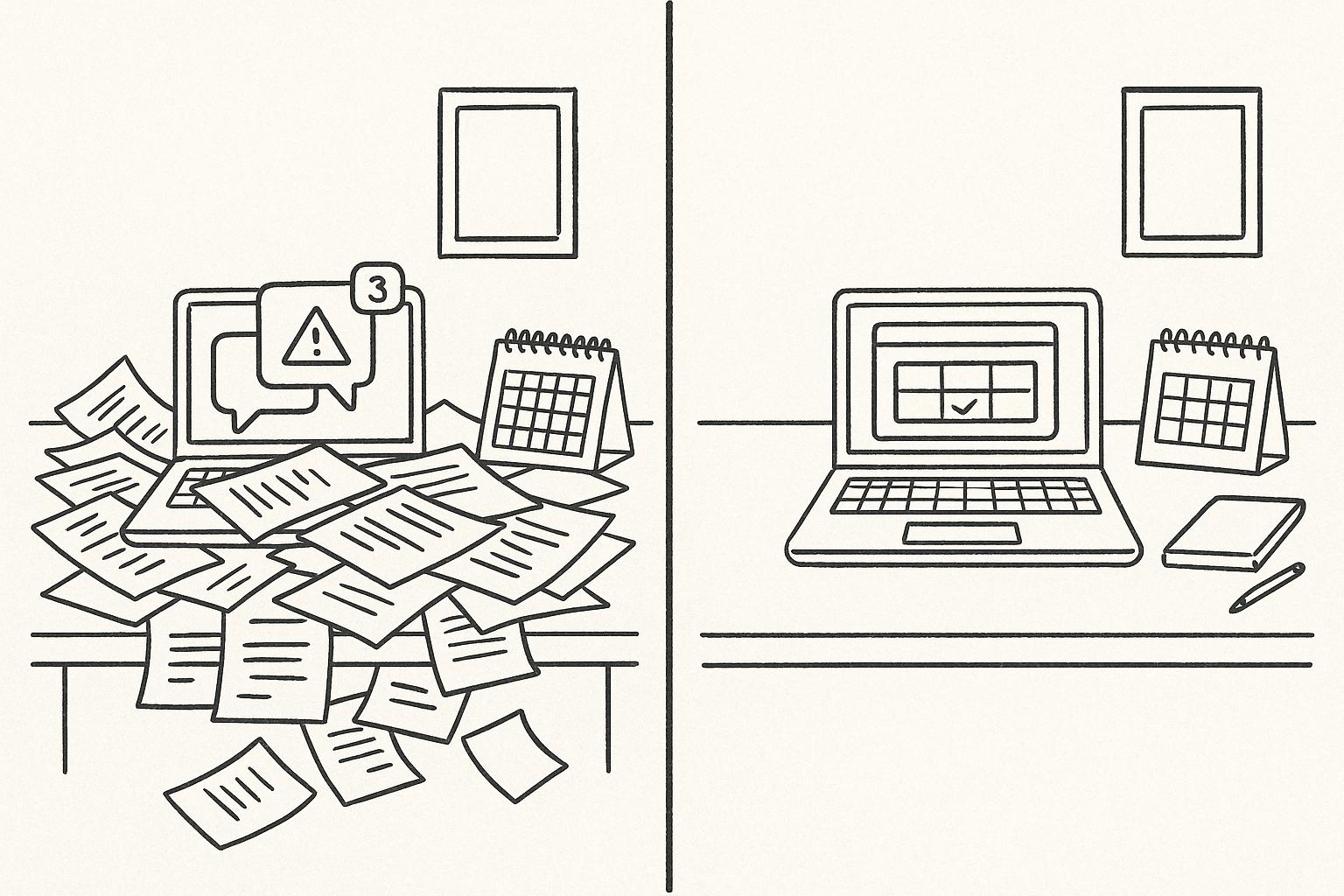
Everyday Situations That Catch Us Off Guard
🎁 Gifts and Shopping
Budgets creep, lists expand, shelves run bare. A fast reset looks like this:
- Cap the gift list by headcount, not by categories.
- Choose one thoughtful theme to simplify decisions, such as “consumables we actually use.”
- Order in two waves to avoid shipping snags.
🍲 Meals and Recipes
Ambitious menus backfire. Better to pick one star dish, one reliable side, and one store-bought helper. Shared meals work well when guests bring a single contribution and label allergens.
Keep prep to repeatable blocks: chop tonight, bake tomorrow, plate the next day. Small wins today protect energy for the actual gathering.
✨ Decorations and Home Prep
Rooms do not need to transform. Focus on high-impact zones: entry, dining table, and one cozy corner. Use bins labeled by room, not by holiday. That way teardown is as simple as the setup.
A short ritual like turning on lights or playing a playlist cues calm and helps everyone arrive emotionally, not just physically.
📅 Social Plans and Commitments
People overcommit because saying no feels awkward. Set a limit on standing events and enforce spacing between nights out.
Surveys echo the strain. In November 2025, an American Psychiatric Association Healthy Minds Poll reported that 41 percent of U.S. adults anticipated more holiday stress than last year, with finances and health concerns weighing heavily.
Two polite scripts help: “Thank you for including us; we’re keeping this week low-key” and “We can’t do the full dinner, but we can stop by for dessert.” Clear, brief, kind.
How to Stay Ahead and Beat Holiday Burnout
Accept Imperfection
Perfection trades joy for control.
Define the acceptable version of each task before work starts. A “good enough” tree, a “good enough” table setting, a “good enough” email.
The mind relaxes when it knows the finish line is reasonable. For holiday stress management, this single shift ends a lot of spirals.
Prioritize Key Moments
Pick three moments to protect: one memory, one connection, one quiet recharge.
This might be a cookie-baking hour with kids, a phone call to a distant friend or relative, and a solo morning coffee. Write them on the calendar or checklist first. Everything else becomes optional.

Share Tasks and Delegate
Family members can own lanes: food, gifts, logistics, cleanup. Businesses can do the same: one person reviews promos, another manages packaging, a third handles customer replies.
Build a simple batched workflow so work happens in blocks, not drips. Hand-offs stick when briefs are short and visual. Templates, checklists, and “definition of done” notes prevent last-minute rewrites.
Simplify Traditions
Traditions survive change.
Swap out a travel-heavy plan for a local ritual. Trade multi-course dinners for soup-and-bread nights. Rotate hosting instead of defaulting to the same home.
The point is not to devalue the past. It is to design a version the current year can actually carry. People forget that gentler traditions often make better memories.
Why Planning Alone Isn’t Enough
Data shows the season itself strains capacity. An American Heart Association survey found that 63 percent of respondents considered the holidays more stressful than tax season, and most took weeks to feel normal afterward.

So, if you’re very busy (who isn’t these days?), the solution is not more planning. The solution is a lighter operating system: fewer moving parts, smarter defaults, and tools that reduce effort at the exact point where people usually drop the ball.
Stryng offers that kind of quiet support: generating posts and visuals, scheduling and managing content automatically. It handles routine marketing tasks so the owner can focus on priorities.
In a way, Stryng acts like a backstage crew when you’re under pressure. The system organizes the run-of-show across channels, then surfaces only the decision that still needs a human. It feels almost magical because the busywork disappears and effort reappears as time with loved ones. Even something small, like turning scattered ideas into an AI-guided content calendar, becomes a quiet release valve. Evenings open up again. The right message still goes out while dinner is served
Bring Your Magical Moments Back
Holiday burnout is not a personal failing. It is a predictable pile-up pressure and too many choices.
The antidote is modest by design: set humane targets, protect a few moments, share the work, and let smart, quiet tools manage the toughest tasks.
That creates a season that feels present and kind.
Frequently Asked Questions
Q: What exactly is holiday burnout?
A: It is a state of emotional and physical fatigue triggered by weeks of extra decisions, social pressure, and disrupted routines. Signs include irritability, poor sleep, overspending, and trouble focusing.
Q: How early should someone start planning to reduce stress?
A: Start small eight to ten weeks out, then switch to weekly sprints by early December. The earlier tasks are light and routine, the less energy they steal from core events.
Q: How can someone say no without guilt?
A: Use brief, kind scripts. Thank the host, name one boundary, and offer a small alternative if possible. Clear limits earn respect and protect energy.
Q: What helps most with seasonal overwhelm?
A: Fewer options and clearer defaults. Decide a theme for gifts, set a limit on commitments, and batch errands. Small structural changes beat heroic willpower.
Q: What can small retailers do to protect their sanity during the holidays?
A: Pre-schedule the obvious campaigns, templatize the routine replies, automate inventory updates, and lean on AI tools like Stryng where it saves time.