Many people who want to start an online store already have full schedules. The idea of selling online usually appears between tasks, late in the day, when there is finally some space to imagine building something of their own.
Platforms, templates, and tools promise quick progress and a clear path to launch. That part is well covered and relatively accessible.
Much less is said about what comes after the store goes live. The ongoing effort required to keep the store visible, active, and consistent is where many founders begin to struggle. This is not a technical issue, but a practical one tied to time and energy.
This article focuses on that overlooked part of the process, especially for people building an online store alongside other commitments, and explores how marketing quickly becomes the largest and least planned part of the workload.
The first steps look simple, the workload expands fast
The early phase of starting an online store is straightforward. There is a product idea, sometimes tested informally, and there is a platform that guarantees a fast setup .
Templates help create something that looks finished before a single sale happens, which reinforces the sense that the hardest part is behind you.
That early progress creates momentum because the store becomes tangible very quickly. Payments can go through, pages are live, and the project feels real rather than theoretical.
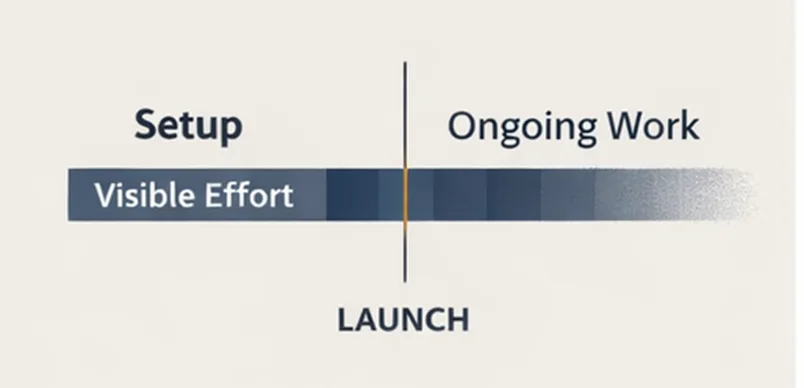
Then a different type of work hits. Traffic does not arrive on its own, and people do not return unless there is a reason to do so. Exposure needs to happen repeatedly, across time.
This transition catches many founders by surprise. Preparation tends to focus on launch day rather than on the weeks that follow, even though the effort does not peak once and disappear. It settles into the routine and begins to compete with everything else that already fills the week.
Choosing a product is easier than staying visible
Deciding what to sell is a contained problem that eventually reaches a conclusion. Visibility does not work the same way: it requires repeated action.
Data from ecommerce platforms consistently shows that new online stores receive very little traffic during their first months without active promotion. This reflects the baseline rather than an exception, and it explains why so many technically sound stores remain unnoticed.
Visibility usually comes through content. Social posts, images, short explanations, and product context all play a role, and each task seems manageable in isolation. Taken together, they occupy more time than most founders expect when they first decide to start an online store.
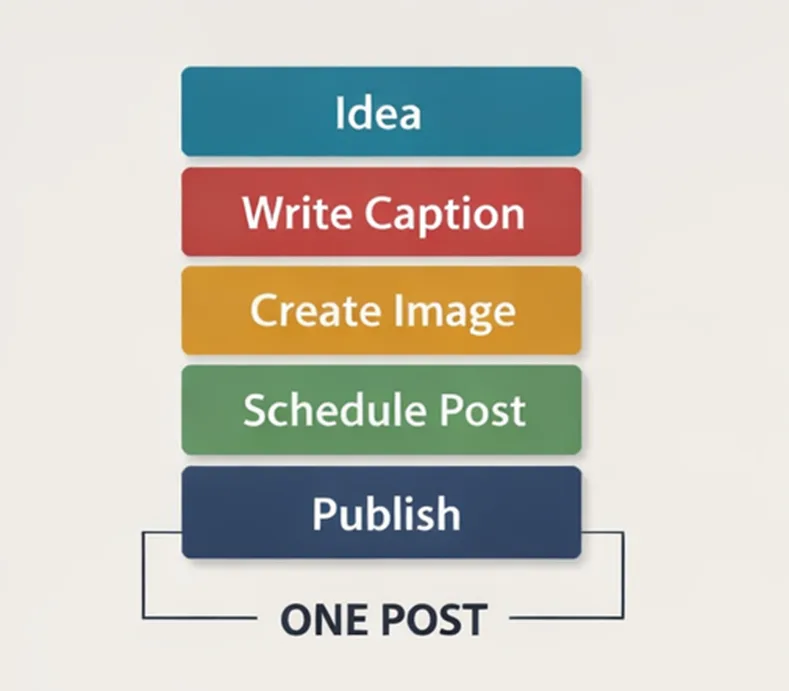
A common pattern unfolds after launch. Activity is high at the beginning, engagement comes from friends or early supporters, and then daily life takes over. Posting slows, gaps appear, and returning to a regular rhythm starts to feel harder than continuing would have been in the first place.
Marketing is where new founders lose the most time
Marketing tasks easily expand in unpredictable ways.
Writing a short caption can take longer than planned, visuals introduce additional decisions, and planning ahead sounds sensible until schedules change.
For people building an online store alongside a full-time job, this creates constant pressure. Time for the store exists in short blocks that fill quickly, and marketing stretches until it occupies whatever space is available. What begins as a small task often turns into an entire evening.
Also, questions about what to post next and which platform to use never fully resolve and return week after week.
Marketing is what keeps the store active in its early stage, and without it the store remains invisible despite being fully functional. This is the point where expectations meet reality.
Your online store already needs a team
Even a one-person store contains several roles that need to be filled.
Content planning, writing, visual creation, scheduling, and publishing all demand different kinds of attention, and in the beginning a single founder carries all of them.
The difficulty does not come from a lack of skill, but from switching between tasks that pull the mind in different directions. Planning interrupts writing, publishing interrupts creative focus, and progress slows.
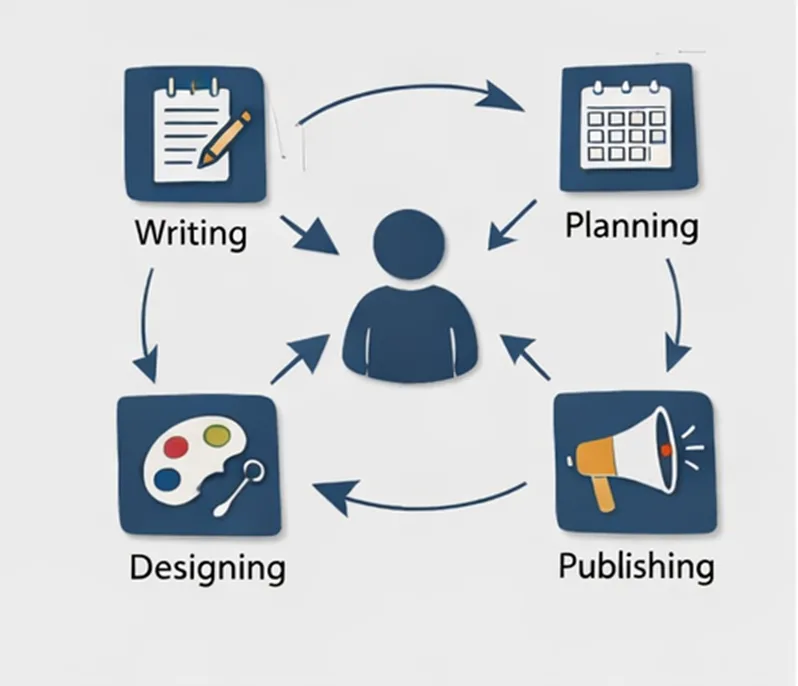
When repetitive tasks move away from direct founder involvement, attention returns to decisions that actually require judgment. Output becomes more predictable, and the store stops depending entirely on bursts of energy.
This is where a tool like Stryng fits naturally. It acts as a first unofficial team member by handling content marketing tasks, including social posts, visuals, calendars, scheduling, and publishing, while the founder stays involved without carrying every step.
Content marketing succeeds through repetition
Posts are expected to look polished, ideas are expected to sound fresh, and results are expected to appear quickly. This pressure leads many founders into overthinking and long pauses that break momentum.
In practice, content marketing for online stores benefits from repetition. Showing products in use, sharing small updates, and returning to the same ideas in slightly different forms builds familiarity over time without demanding constant novelty.
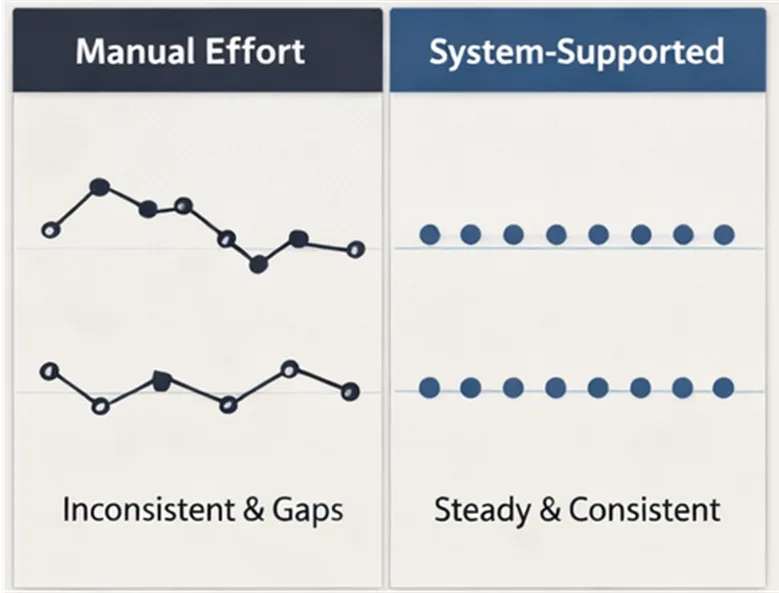
Many stores that last follow a simple rhythm. Content goes out regularly, the tone stays consistent, and the store remains present without dramatic spikes or constant reinvention. Systems support this approach far better than ad-hoc effort.
Starting a store while working full time changes priorities
Advice about starting an online store often assumes flexible schedules, yet many founders build their stores around fixed commitments. Progress depends on protecting limited time rather than expanding effort.
Reliability becomes more valuable than speed, and anything that reduces planning and decision fatigue brings real relief.
Among early and resource-constrained founders, marketing is often postponed or underestimated, and is frequently the first area to lose consistency when time and energy are limited.
Tools reduce this risk by maintaining continuity during busy periods. This is another point where Stryng supports founders, helping maintain presence when time is scarce.
The advantage of starting with the right support
Starting an online store already requires patience and persistence. Carrying every task alone adds unnecessary strain, even though many founders do it because it seems responsible.
The right support reduces mental burden by removing tasks from daily planning and allowing progress to continue without constant effort. The store becomes easier to manage, and decisions regain clarity.
This advantage shows up as fewer stalled weeks, fewer abandoned plans, and more time spent on decisions that need human judgment.
For people who want to start an online store today, progress depends less on pushing harder and more on building a structure that can hold steady over time.